

Pattern & Copyright Note: Crochet patterns may vary slightly depending on your yarn, hook size, and personal tension. Use the measurements and instructions as a guide, and adjust your tension as needed. This CrochetFloria tutorial, including its instructions, photos, and original content, is protected by copyright. You’re welcome to make the finished project for personal use or as a gift. Please do not copy, republish, or redistribute the pattern or photos. To share it, please link to the original CrochetFloria article.
Affiliate Disclosure: We earn from qualifying purchases made through the affiliate links in this article, at no extra cost to you. We only recommend products that may be useful for your crochet projects.
Crochet lavender flowers are a lovely way to add a touch of color and handmade charm to your home. With their tiny purple blooms and slim green stems, they look beautiful in small vases, handmade bouquets, and thoughtful gifts. Unlike fresh flowers, crochet lavender won’t wilt, so you can enjoy these delicate decorations all year round.
In this tutorial, you’ll learn how to crochet lavender flowers step by step, including how to make the purple flower heads, wrap the stems, and add green leaves. You’ll also find helpful tips for finishing your flowers neatly and arranging them into a beautiful lavender bouquet.
Looking for more inspiration? You’ll also find 9 crochet lavender ideas to try, with creative designs for accessories, clothing, bags, blankets, and home decor. Whether you want to make a simple flower sprig or try a new crochet project, these ideas will help you explore different ways to enjoy lavender.
Ready to get started? Follow the tutorial below and download the crochet lavender pattern PDF to guide you through the project. Gather your supplies, choose your favorite purple yarn, and let’s make some beautiful crochet lavender flowers.
Save This on Pinterest!
Don’t have time to read this tutorial right now? Save it on Pinterest so you can come back later and make your own crochet lavender flowers
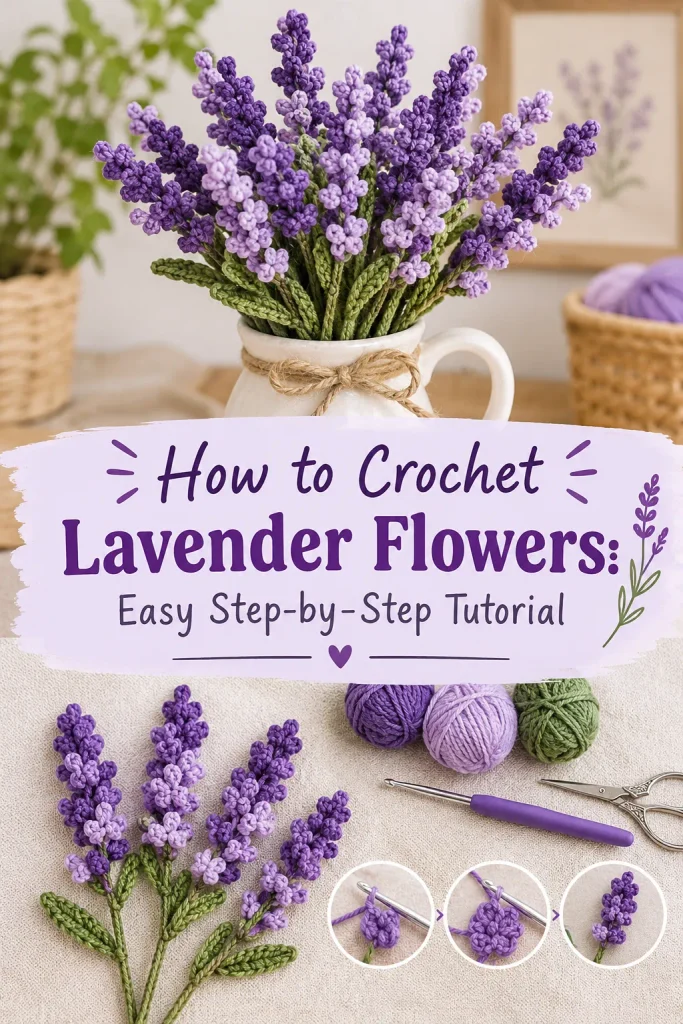
Quick Guide
| Part | What it does | The look to aim for |
| Flower head | The purple bloom at the top | Slim, tapered, slightly bumpy |
| Stem | Holds the flower upright | Smooth, evenly wrapped green |
| Leaf | A small accent along the stem | Narrow and pointed |
| Bouquet | Several stems gathered together | Loose, natural, varied heights |
The whole project is made of small pieces, so it works well for yarn leftovers. The one thing to protect is the shape. Lavender should look long and narrow. A short, wide bloom starts to read as a bud or a tiny cone.
What You’ll Need to Crochet Lavender Flowers
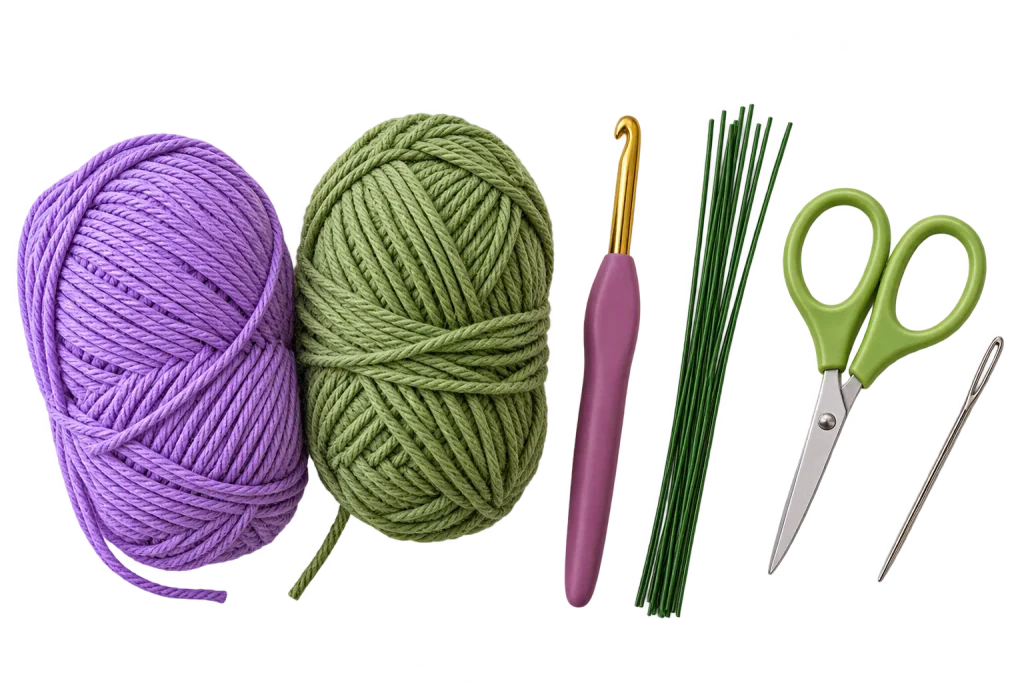
You don’t need much, but it helps to have everything within reach before you start.
- Purple yarn for the flower heads. Anything from pale lilac to deep violet can work. Muted, slightly dusty purples look the most like real lavender.
- Green yarn for the stem and leaf. Sage, moss, and olive look more natural than a bright green.
- A crochet hook that suits your yarn. Check the label for the recommended size, then go down a size if you want a firmer fabric.
- Floral wire or another sturdy stem support so the flower stands upright.
- A yarn needle and scissors for stitching and hiding ends.
- Optional extras: a bit of stuffing or yarn scraps for the bloom, fabric glue for securing the base, and twine, ribbon, or raffia for bouquets.
Lavender looks best when the stitches are snug. If your fabric looks gappy or loose, drop down a hook size. Compact stitches help the bloom hold its slim shape.
Crochet Supplies Quick Links
Explore useful supplies and tools for your crochet projects. These shopping links make it easier to find materials and accessories for your next handmade creation
- Cotton Yarn – Find cotton yarn in different colors for your flower.
- Cotton 8 Yarn – Browse yarn options for small crochet projects.
- Crochet Hooks – Find the right hook for your crochet work.
- Floral Wire – Useful for shaping petals and making flower stems.
- Green Florist Tape – Wrap and finish your crochet flower stems.
- Shop LoveCrafts – Discover more yarn and craft supplies.
Crochet Lavender Size and Finished Measurements
The size of your lavender depends on your yarn, your hook, and your own tension, so two people following the same steps can end up with slightly different stems. That’s part of the charm, and it also gives you control.
- Thinner yarn and a smaller hook create a delicate, realistic lavender that suits mini bouquets and small jars.
- Thicker yarn and a larger hook create a bolder, chunkier stem that holds its own in a big vase or a floor arrangement.
- Stem length comes from your wire. Cut it to fit your container before you start wrapping.
Make one test stem first and hold it beside the jar or vase you plan to use. Then lengthen or shorten the next ones. A mix of heights always looks more natural than a row of identical stems.
How Crochet Lavender Flowers Are Made
Each lavender stem is built in four simple stages:
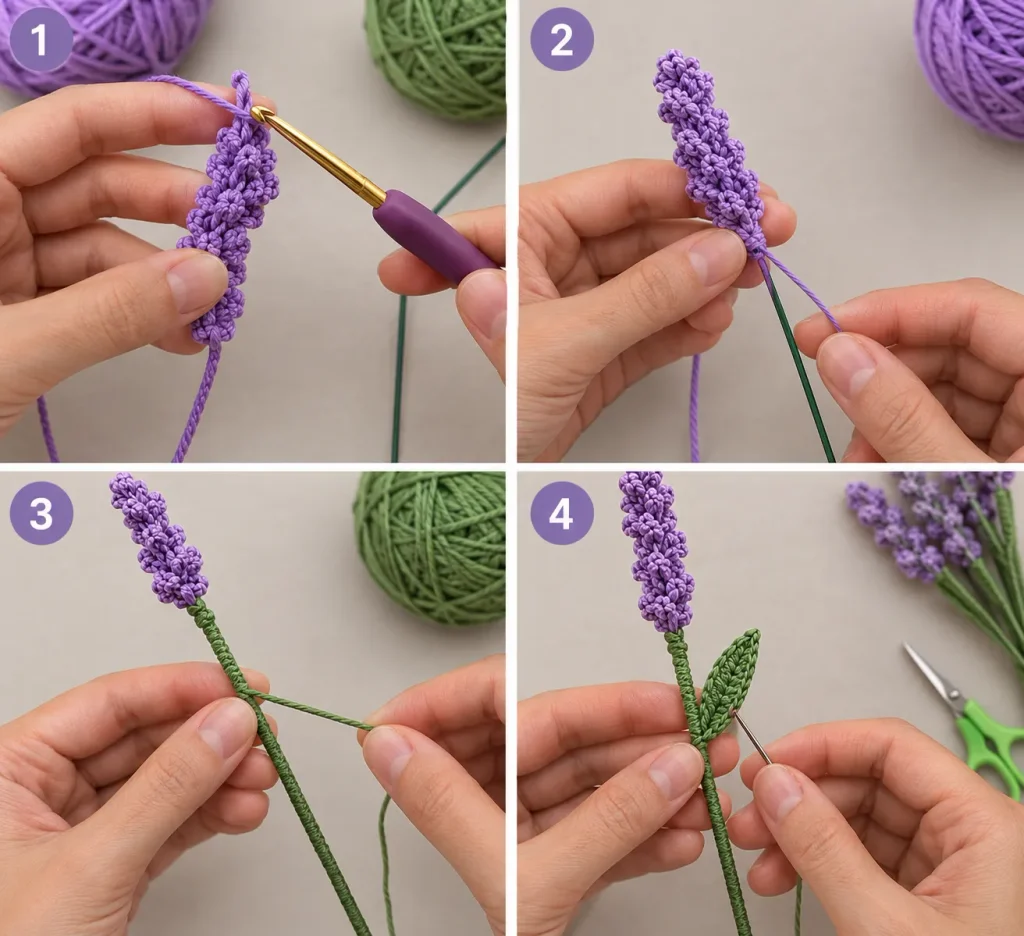
- Crochet a slim, textured flower head in purple.
- Shape it and wrap it around the top of the wire.
- Cover the wire with green yarn, working from the bloom down.
- Crochet a narrow leaf and attach it to the stem.
Because each stage is small, batch work makes the process smoother. Crochet all your flower heads first, then wrap all your stems, then make the leaves. You’ll settle into a rhythm, and your blooms will match more closely.
Follow the Crochet Lavender Tutorial Step by Step
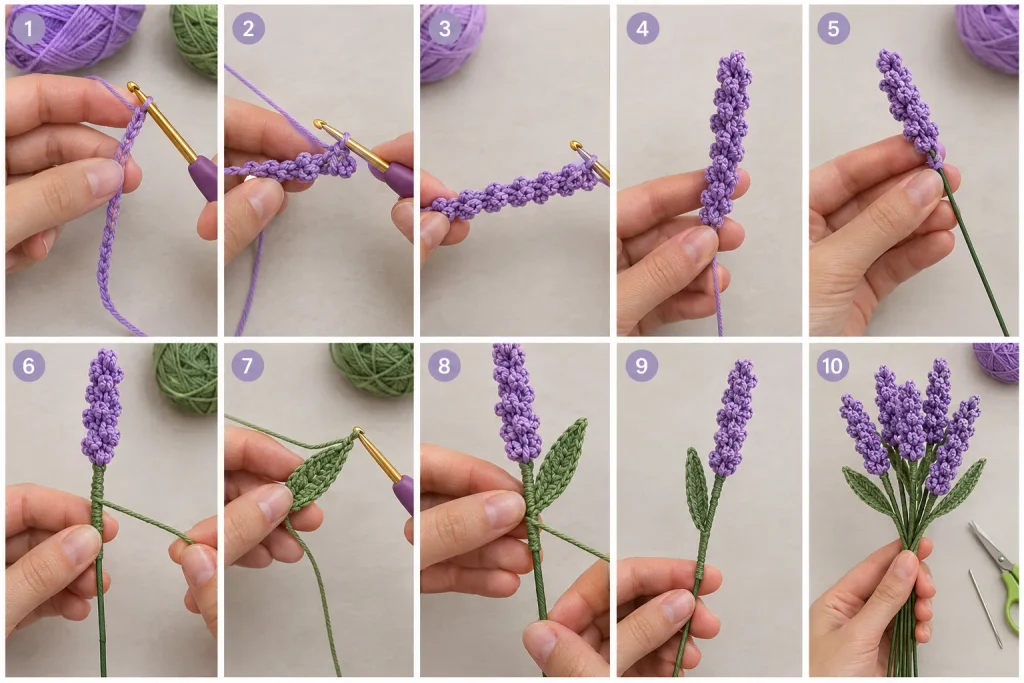
Use the 10-step photo guide as a visual reference while making your crochet lavender. Start with the purple flower head, then shape and secure it around the top of the stem. Next, cover the stem with green yarn and prepare the leaf. The final steps focus on attaching the leaf, securing loose ends, and tidying up your finished lavender.
Work through each stage at your own pace, checking the photos as you go. The exact stitches and assembly method should follow your chosen PDF pattern, so use the guide alongside the instructions rather than relying on the images alone.
How to Crochet the Lavender Flower
Start with the purple yarn. You’re aiming for a small, slightly bumpy piece that will become a tapered flower head, similar to a real lavender spike covered in tiny buds.
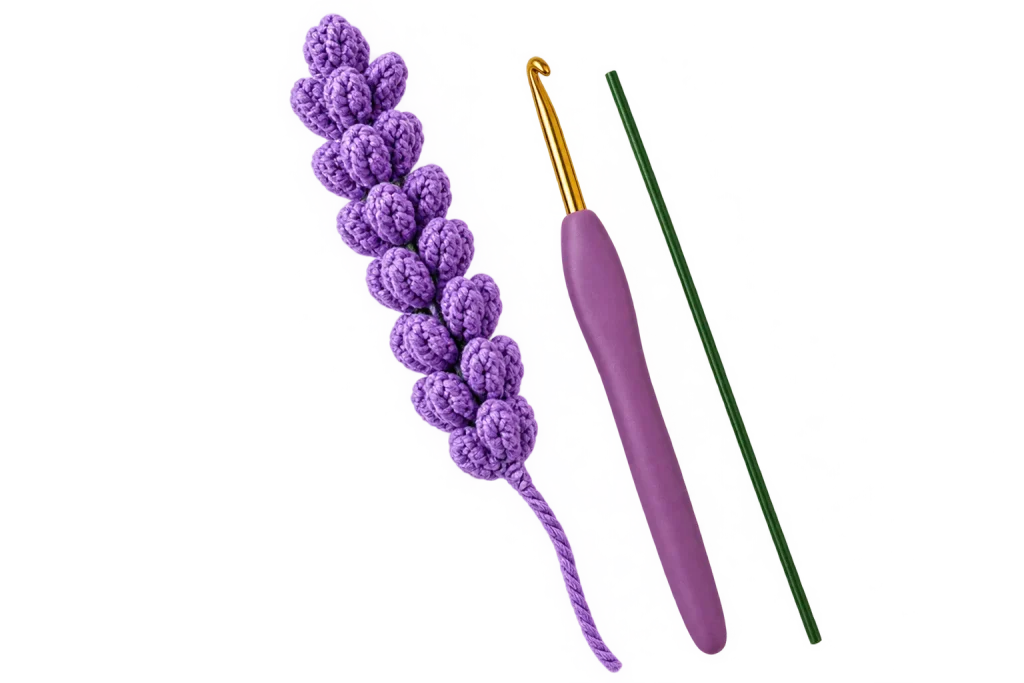
Work with short, tight stitches so the piece stays dense and holds its form. Textured stitches suit lavender well because the little bumps mimic the clustered buds along the stem. Keep checking the shape as you go:
- If the piece starts to flare outward, tighten your tension.
- If it curls to one side, lay it flat and reshape it gently before continuing.
- If it looks too smooth, add more texture on the next flower head so the bloom reads as buds instead of a plain tube.
When the flower head is as long as you want it, fasten off and leave a tail long enough for sewing. You can make every bloom in one shade, or switch between two nearby purples to give the bunch more depth.
How to Shape and Wrap the Lavender Flower Head
Now the flat piece becomes a flower. Place the top of your wire inside or along the center of the purple piece, then roll or wrap the crochet around it so it forms a slim, tapered spike.
Use the yarn tail and needle to stitch the edge closed. Pull gently so the bloom sits snug on the wire without bunching near the base.
A few shaping tips:
- Keep the tip narrow and slightly pointed, since that’s what makes the bloom look like lavender.
- Pinch the base so the flower head sits neatly where the stem begins.
- If the bloom slides on the wire, a tiny dab of fabric glue under the base will hold it.
Tuck any yarn tails inside the bloom so the outside stays clean.
How to Wrap the Crochet Lavender Stem
Switch to green yarn. Anchor the end at the base of the bloom, then begin wrapping down the wire. Keep the yarn snug and overlap each turn slightly so no metal peeks through.
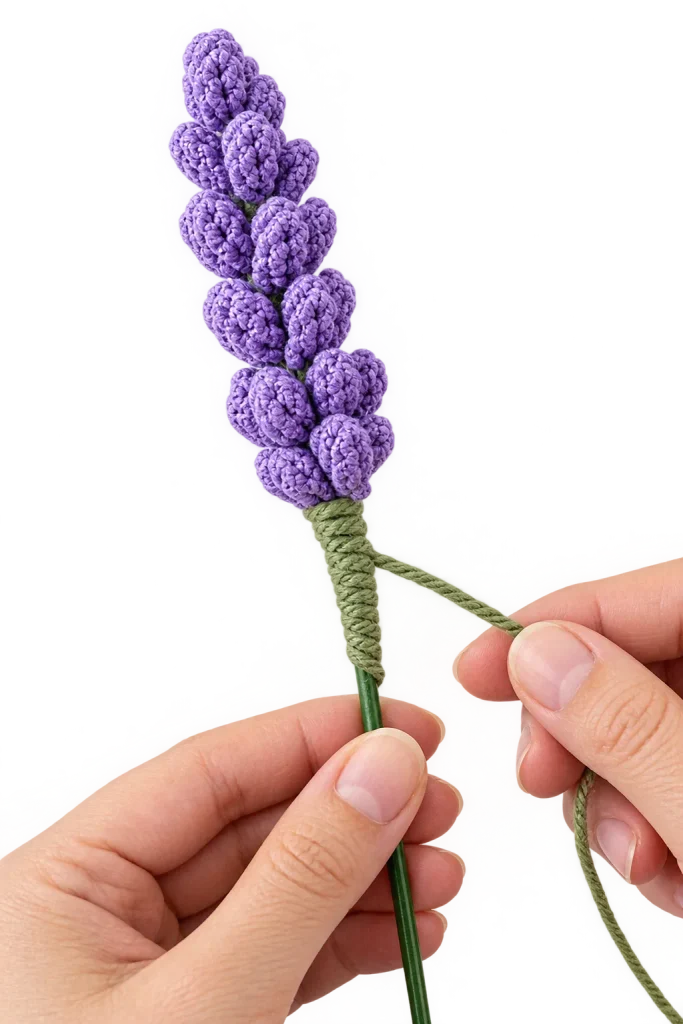
A steady rhythm gives the cleanest result. Hold the wire in one hand and turn it slowly while the yarn feeds from the other. Keep the tension even so the stem doesn’t look lumpy. When you reach the bottom, tuck the end in and secure it with a small knot or a bit of glue.
If you like a sturdier stem, wrap a second layer back up toward the bloom. It adds strength and gives the stem a fuller look in a bouquet.
How to Crochet the Lavender Leaf
Real lavender foliage is thin and pointed, so the leaf should be too. Use green yarn to make a narrow, tapered piece that ends in a point. Keep it slim and short. Lavender leaves are a quiet accent, not a main feature.
Making a few leaves in slightly different lengths adds realism. Leaves are optional, but they help the stem feel finished and keep a bunch from looking too plain.
How to Attach the Leaf and Finish the Stem
Place the leaf against the stem a little below the bloom. Sew the base to the stem with small stitches that sink into the green wrap, and let the tip curve slightly away from the stem as if it grew there.
To finish the stem:
- Hide all yarn ends inside the wrap.
- Trim stray fibers.
- Give the stem a gentle bend.
- Check the base of the bloom and re-secure it if needed.
Real lavender rarely stands perfectly straight, so a soft curve makes the stem look more believable.
How to Customize Your Crochet Lavender
Once you know the basic method, small changes give very different looks.
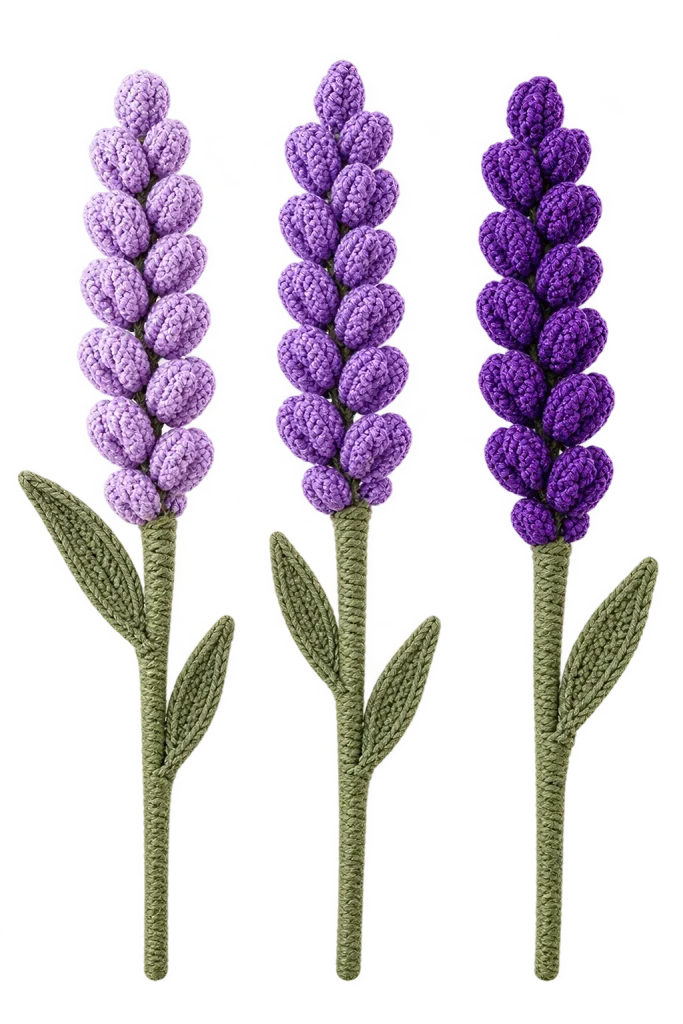
Color has the biggest effect. Pale lilac feels soft and springlike, deep violet looks richer and more dramatic, and dusty mauve gives a vintage feel. Putting two nearby purples in one bunch creates the natural variation you see in real fields.
Texture changes the mood too. Smoother stitches look neat and modern, while bumpier ones look more like real buds. Bloom length sets the personality. Short blooms suit mini arrangements, and long ones create tall, graceful stems.
For the stem, sage green looks soft and rustic, while a deeper green feels more traditional. A tiny ribbon bow near the base, or a few turns of twine, adds a farmhouse touch.
How to Make a Crochet Lavender Bouquet
Lavender stems are slim and light, so a bouquet comes together quickly. To make one look full and natural:
- Mix the heights. Make stems in a few different lengths so the blooms sit at varied levels.
- Gather them loosely. Hold the stems in one hand and let the blooms lean in slightly different directions.
- Add green filler. A few extra leaves tucked between stems make the bunch look fuller.
- Tie the bundle. Wrap twine, ribbon, or raffia just below the blooms.
- Trim the bottoms. Cut the wire ends evenly so the bouquet can sit flat in a jar.
For a richer look, mix two purple shades. For a softer, more romantic feel, tuck in a few cream or white stems. A good bouquet starts to look balanced at around a handful of stems, and from there you can keep adding until it feels full.
9 Crochet Lavender Flower Ideas to Try
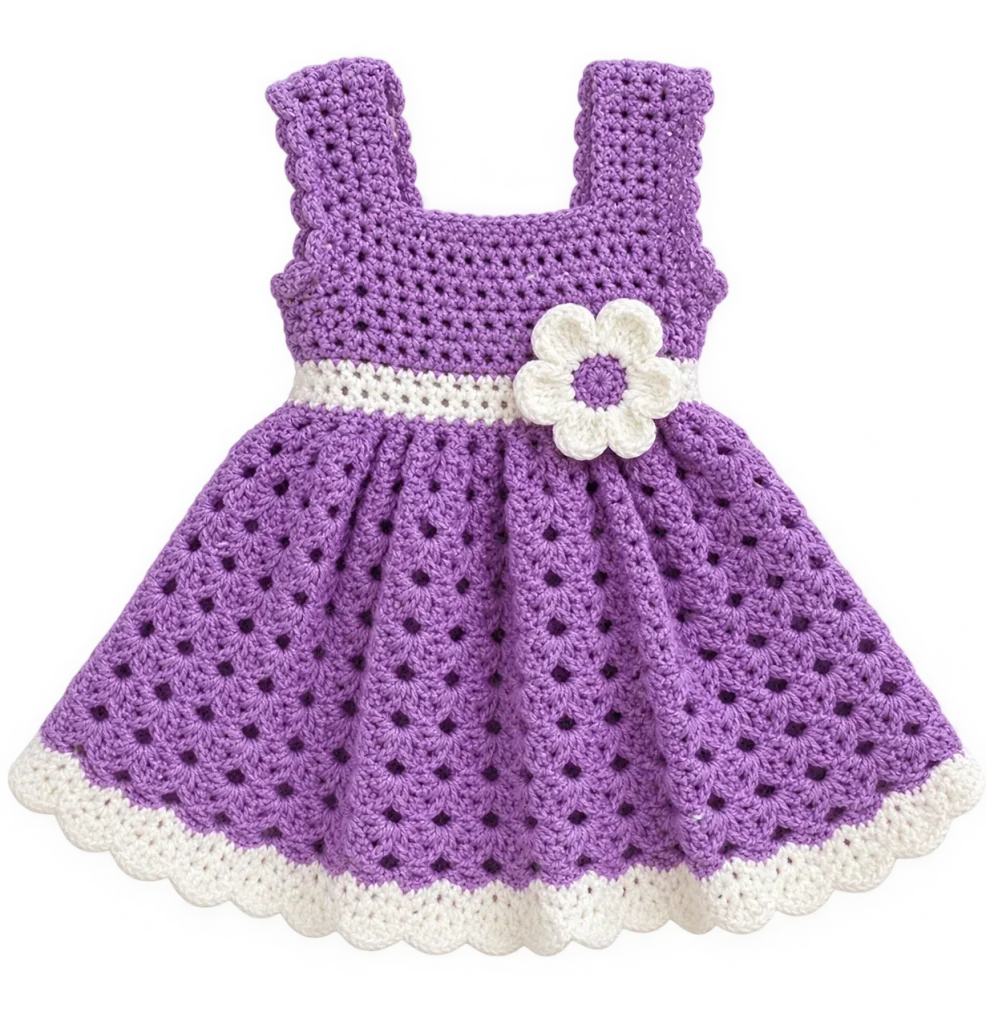
1. Crochet Lavender Baby Dress
A purple crochet baby dress with white ruffled edges and a small flower at the waist makes a lovely handmade outfit. You can use this design for a special occasion, a baby photoshoot, or a thoughtful gift.
2. Crochet Lavender Hair Accessories
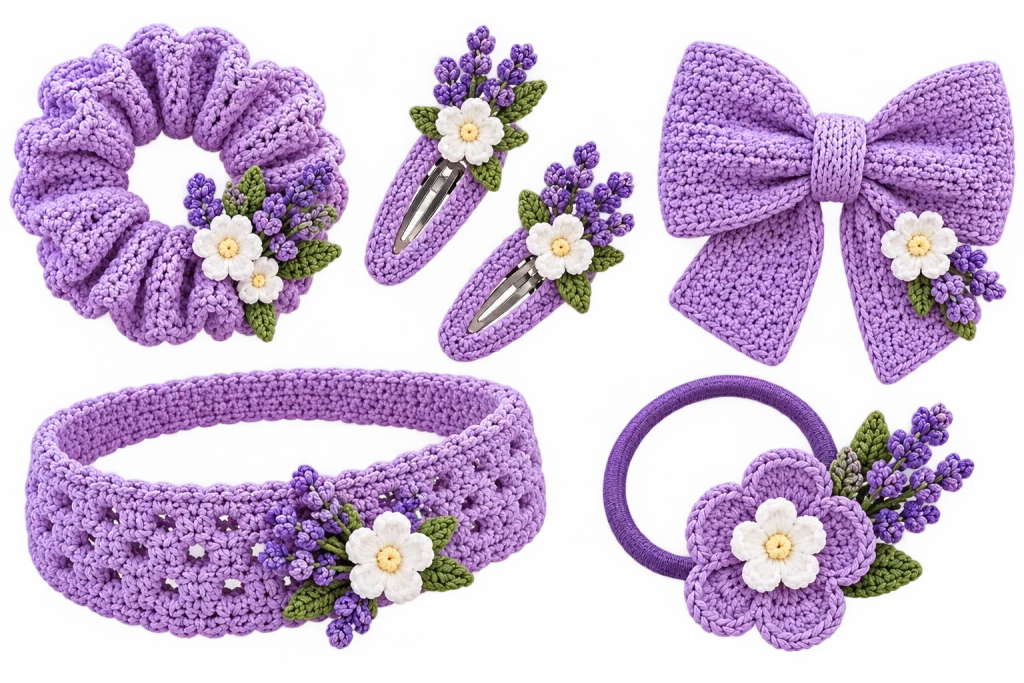
Add small purple crochet flowers to hair clips, headbands, or scrunchies. They look pretty with both everyday hairstyles and special occasion outfits, and you can mix purple and white yarn for a soft floral look.
3. Crochet Lavender Tote Bag
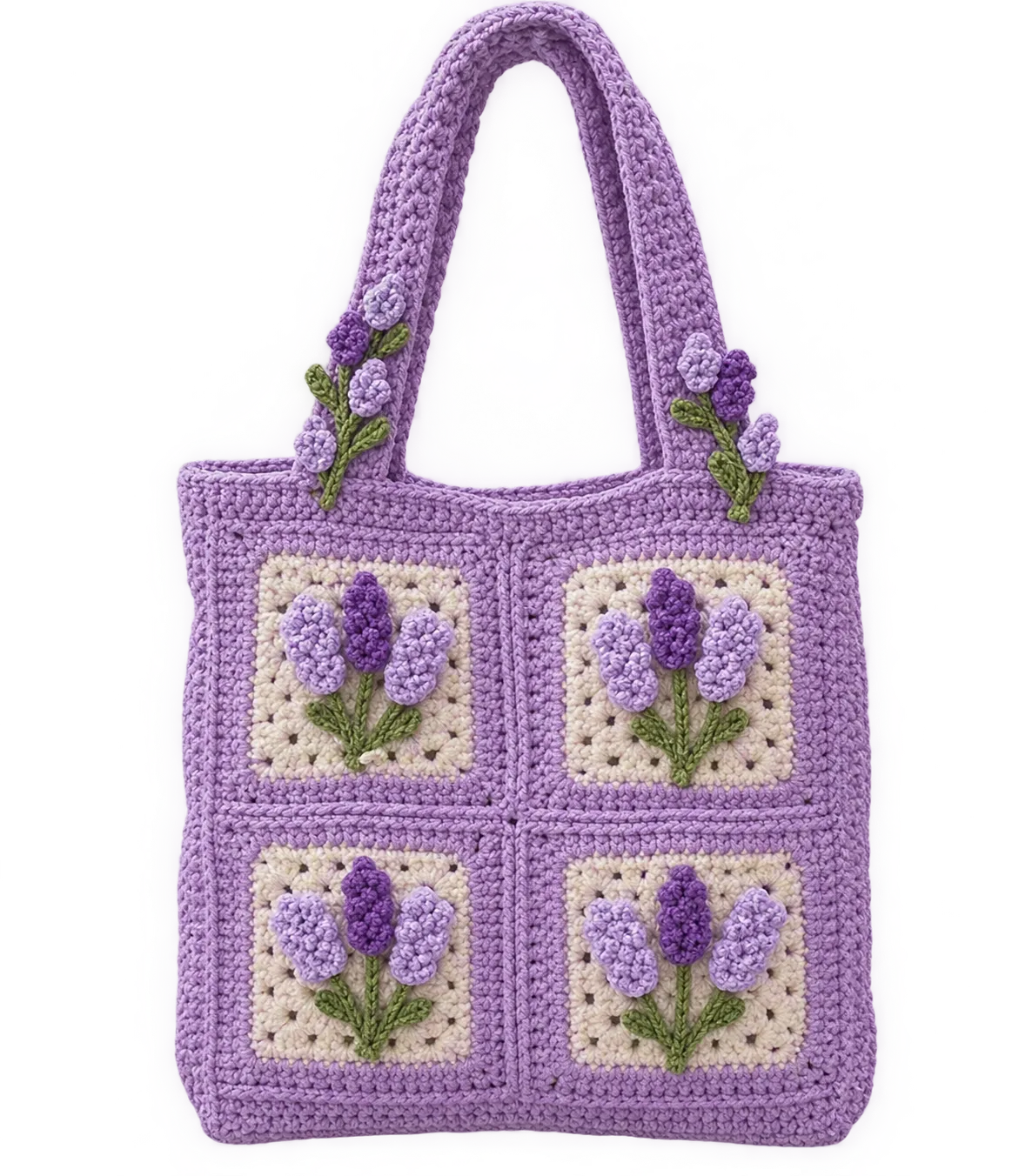
Decorate a plain tote bag with small crochet lavender flowers for a simple handmade touch. Arrange them along the bottom, add a few near the handle, or create a small floral design on the front.
4. Crochet Lavender Cardigan
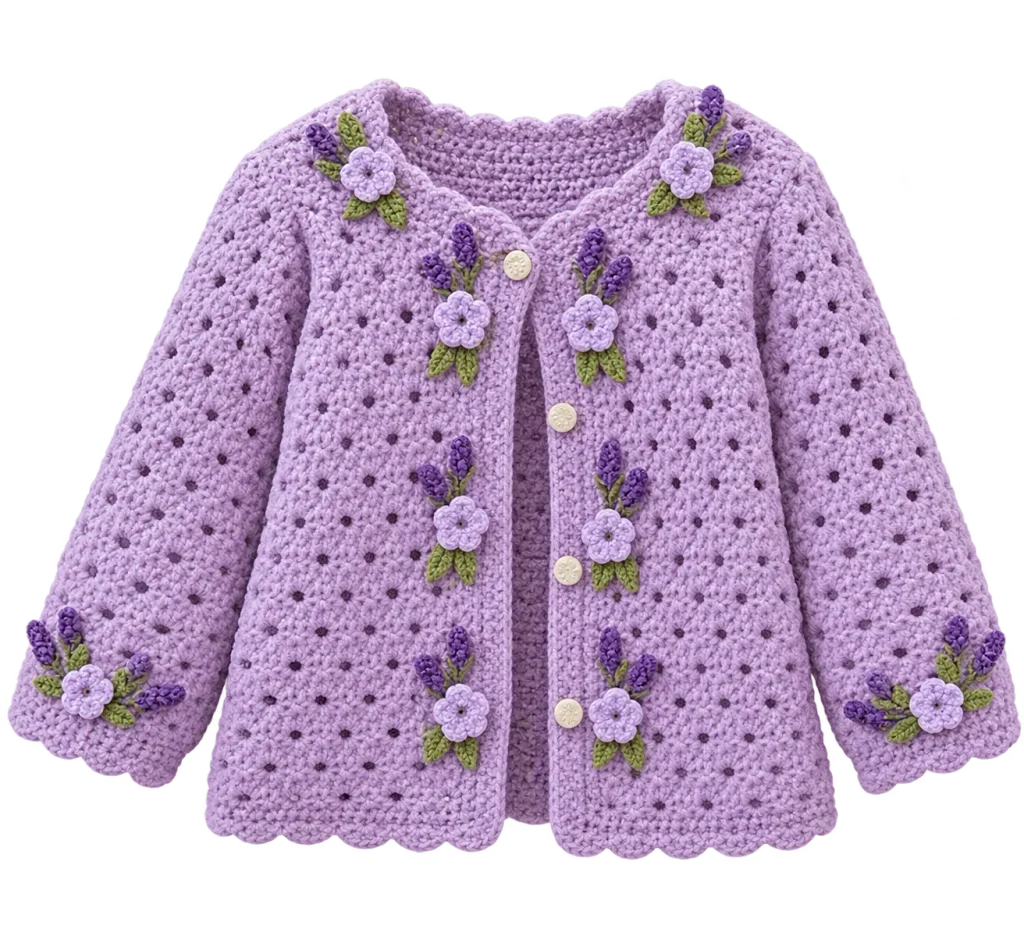
Small crochet lavender flowers can make a cardigan feel more personal. Add a few along the front, around the cuffs, or near the neckline to create a delicate floral detail that works well with neutral or pastel colors.
5. Crochet Lavender Baby Blanket
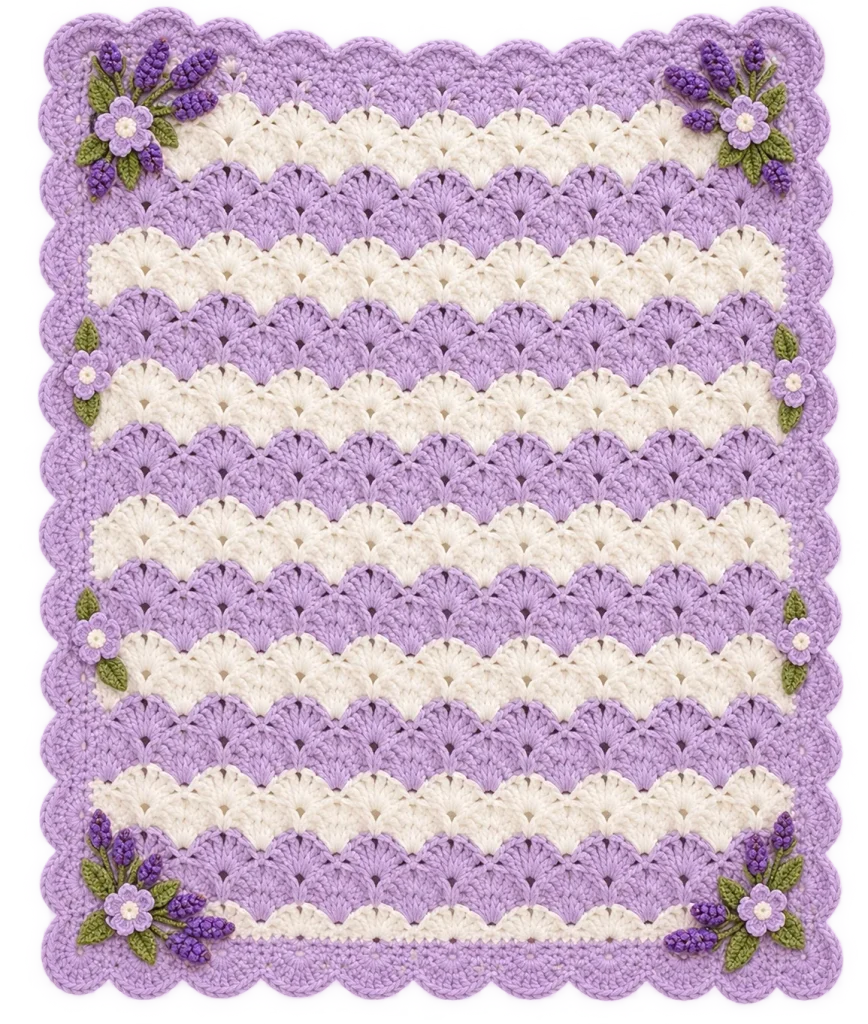
A lavender and cream crochet baby blanket is a lovely choice for a handmade nursery gift. The soft purple and white shell stitches create a beautiful striped pattern, while the small crochet flowers and green leaves along the edges add a delicate floral touch. This design is perfect for a baby shower gift or a pretty nursery decoration.
6. The windowsill jar
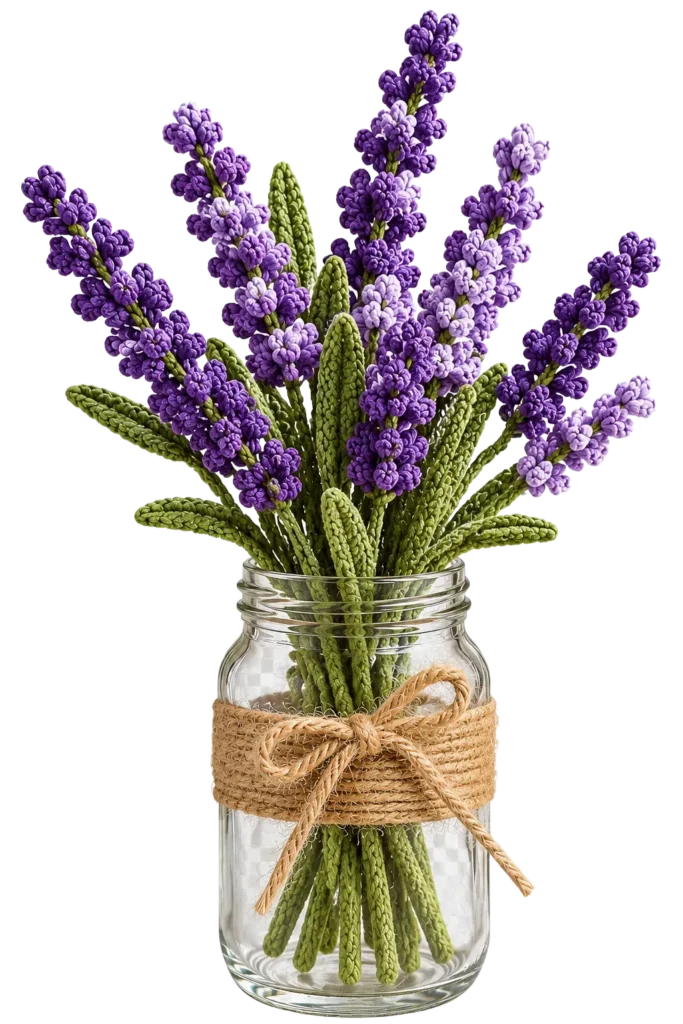
A small handful of short stems in a clear glass jar looks like a tiny meadow. Wrap a strip of burlap or twine around the jar, and it fits right into a farmhouse kitchen.
7. The gift bouquet
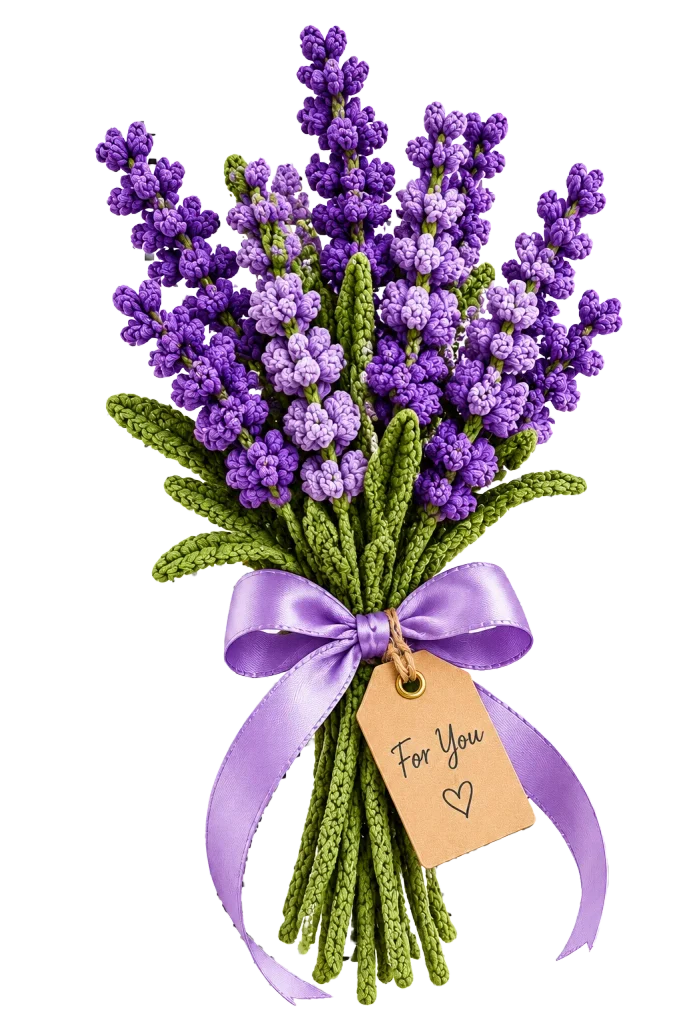
Tie a few stems with satin ribbon and add a small handwritten tag. It’s an easy handmade gift for teachers, birthdays, and Mother’s Day, and it won’t wilt.
8. The wreath accent
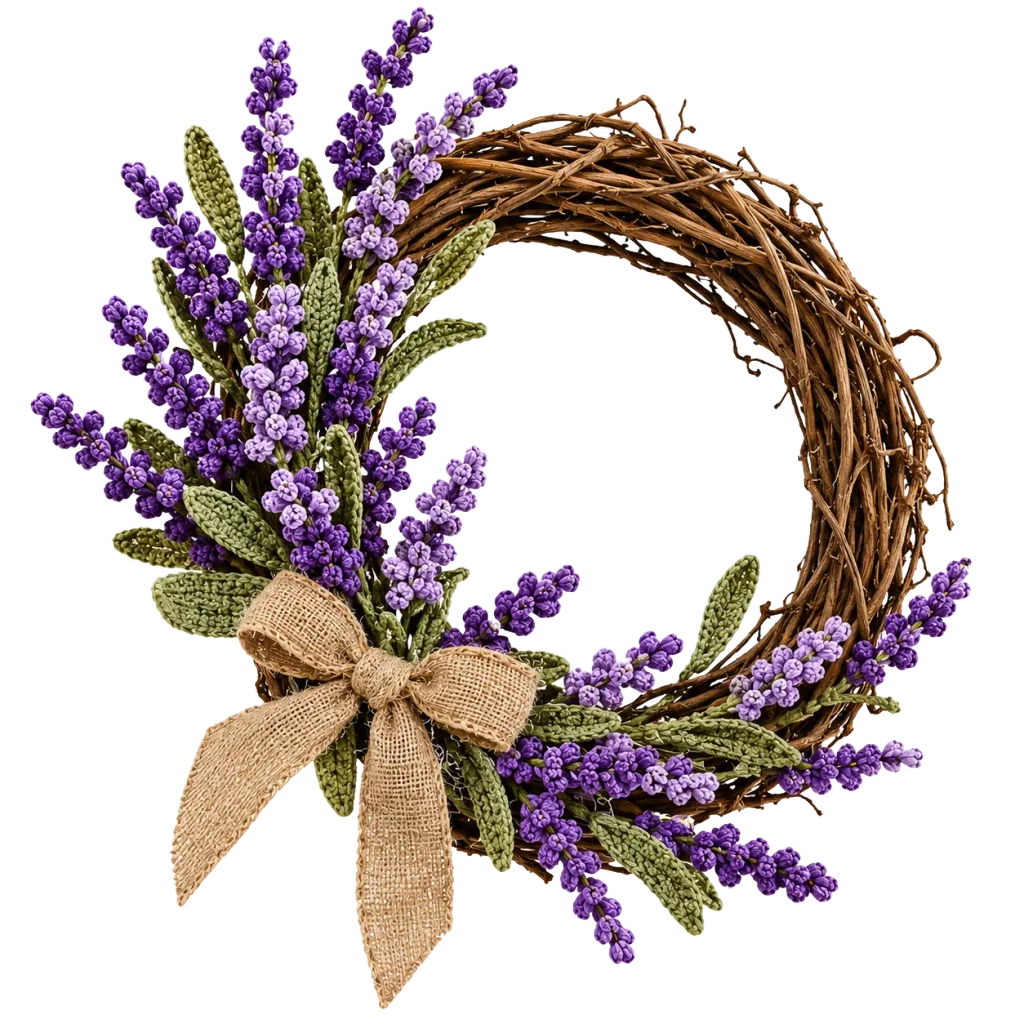
Weave several stems into a grapevine wreath. The slim purple blooms add color to a neutral base without crowding it, and the wreath works for a door, a wall, or a table centerpiece.
9. The mixed arrangement
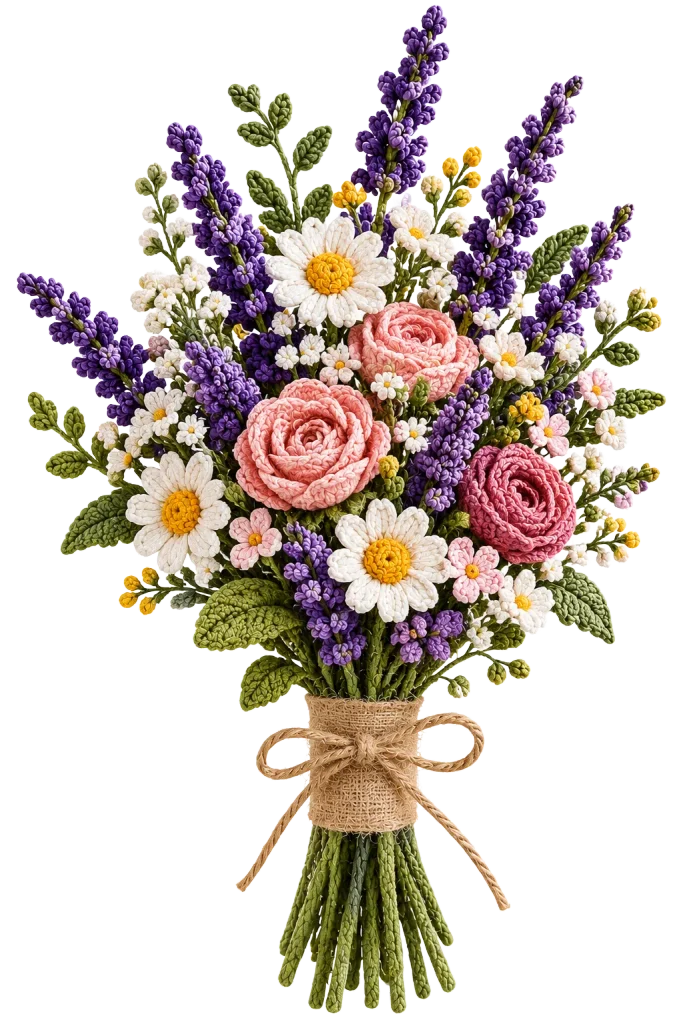
Place lavender among crochet daisies, roses, or tiny filler flowers. Its tall, narrow shape creates contrast with rounder blooms and gives a mixed bouquet some vertical movement.
Tips for Making Beautiful Crochet Lavender Flowers
- Stitch tightly. A firm fabric holds its shape and looks cleaner.
- Work in batches. Make all the blooms, then all the stems, so the pieces match.
- Choose a muted purple. Dusty tones look more like real lavender than bright violets.
- Match the yarn to the look. Cotton gives crisp definition, and softer yarns give a fuzzier, gentler finish.
- Test your wire. Make sure it’s sturdy enough to hold the bloom before you commit to a whole bouquet.
- Hide every tail. Loose ends show easily on a slim flower.
- Bend stems gently. A soft curve looks more natural than a rigid line.
Common Crochet Lavender Problems and How to Fix Them
The flower head looks too wide. Use a smaller hook, tighten your tension, or narrow the shape as you work.
The bloom slides down the wire. Secure it with a little fabric glue or stitch it more firmly at the base.
The stem looks lumpy. Wrap with even tension and overlap each turn slightly. Unwind and redo any section that bunches.
The wire shows through. Add a second layer of green yarn, or wrap a little tighter.
The flower feels floppy. Switch to a firmer yarn, stitch more tightly, or add a small amount of stuffing inside the bloom.
The leaf looks bulky. Use thinner yarn, or make the leaf narrower and shorter.
PDF Pattern
How to Use Crochet Lavender Flowers for Gifts and Decor
Crochet lavender fits into more spaces than you might expect.
- Home decor: A bunch in a jar on a kitchen shelf, a small vase on a nightstand, or a basket by the entryway all add a calm, cottage feel.
- Gifts: A small bouquet tied with ribbon makes a lasting keepsake for a friend, teacher, or family member.
- Seasonal displays: Lavender is a natural fit for spring and summer, and muted purples also work in cozy autumn centerpieces.
- Weddings and parties: Small bunches work as table decor, favors, or an accent in a handmade bouquet.
- Wreaths and garlands: Tucked into greenery, the slim blooms give a soft, cottage-garden look.
If you like a fragrant touch, place a small lavender sachet near the display instead of putting oil directly on the yarn. Oil can stain light-colored fibers.
Frequently Asked Questions
1. Is crochet lavender easy to make?
Yes, crochet lavender can be a fun project for beginners who know basic crochet stitches. Follow the steps carefully to create the purple flower heads, wrap the stems, and add the leaves.
2. What yarn is best for crochet lavender flowers?
Cotton yarn is a good choice because it helps the small flower details hold their shape. Choose purple yarn for the blooms and green yarn for the stems and leaves.
3. What crochet hook size should I use for lavender flowers?
The best hook size depends on your yarn and the pattern. For this project, use the 2 mm crochet hook listed in the materials.
4. How do you make crochet lavender stems?
Make the purple flower section first, then attach it to the stem. Wrap the stem with green yarn to cover the wire, and add a crochet leaf if your pattern includes one.
5. How do you keep crochet lavender flowers in shape?
Arrange the flower heads gently and make sure they are securely attached to the stems. Wrapping the stems neatly and shaping the purple blooms carefully will help give your lavender a tidy appearance.
6. What can you do with crochet lavender flowers?
You can place crochet lavender in small vases, create handmade bouquets, decorate shelves, or use the flowers as thoughtful handmade gifts.
7. Can I make a crochet lavender bouquet?
Yes! Make several lavender stems and arrange them together in a small vase or tie them with a ribbon. You can also combine them with crochet roses, daisies, or other flowers.
8. Where can I get the crochet lavender pattern PDF?
You can find the crochet lavender pattern PDF in the pattern section at the end of this article. Use it as a reference while making your lavender flowers.
9. What other crochet lavender projects can I try?
You can explore lavender-inspired accessories, bags, cardigans, baby blankets, and other floral crochet projects. Check out the nine crochet lavender ideas in this article for more inspiration.
More Crochet Ideas & Inspiration
Looking for your next crochet project? Visit our shop to explore our crochet patterns and find your next handmade project.
Follow us on Pinterest and Instagram for more crochet ideas and inspiration for your next project. We’d love to have you join our crochet community!
[…] first calla lily, you can build a mixed bouquet with other flowers from CrochetFloria, including crochet lavender and a crochet […]
[…] you’ve made your first poppy, you can combine it with other flowers from CrochetFloria, such as crochet lavender and a crochet tulip, for a garden-style […]
[…] lavender. Its slim purple spikes add height and echo the violet tones of the pansy. See our crochet lavender tutorial for the full […]