

Pattern & Copyright Note: Crochet patterns may vary slightly depending on your yarn, hook size, and personal tension. Use the measurements and instructions as a guide, and adjust your tension as needed. This CrochetFloria tutorial, including its instructions, photos, and original content, is protected by copyright. You’re welcome to make the finished project for personal use or as a gift. Please do not copy, republish, or redistribute the pattern or photos. To share it, please link to the original CrochetFloria article.
Affiliate Disclosure: We earn from qualifying purchases made through the affiliate links in this article, at no extra cost to you. We only recommend products that may be useful for your crochet projects.
A crocheted flower can sit in a vase, hang on a wall, or trim a curtain, and it will never wilt or drop petals on the table. That flexibility is why crochet flower home decor works in almost any room. A small yellow daisy on a kitchen windowsill and a full cream-colored bouquet on a bedroom dresser feel like completely different projects, even though they start from the same craft.
This guide goes room by room, then looks at the bigger display formats: bouquets, wreaths, and garlands. It also covers color, styling, care, and where to begin if you’re new to flower projects.
Before starting, we’ve got some other related Crochet articles, Take a Look:
- How to Crochet a Sunflower for Home Decor and Gifts
- How to Crochet a Rose: Easy Step-by-Step Flower Tutorial
Save This on Pinterest!
No time to read this Crochet Flower Home Decor Ideas? Click on the save button and pin it for later!
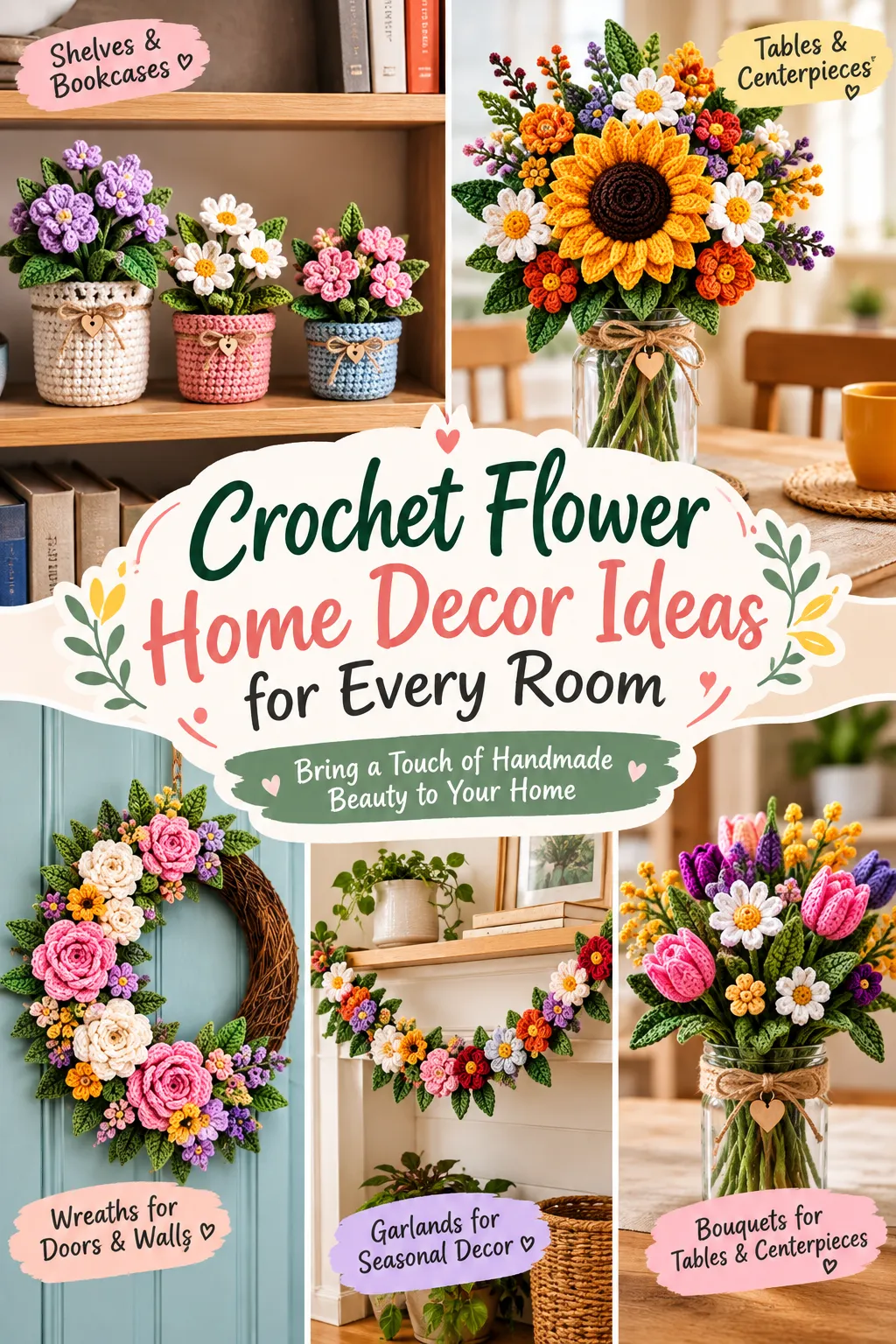
Quick Guide: Which Decor Format Fits Which Space
| Decor format | Best spots | Overall look |
| Crochet flower vase arrangement | Coffee tables, dressers, dining tables | Soft, full, centerpiece style |
| Crochet flower wall hanging | Bedroom walls, entryways, above desks | Textured, artistic, cozy |
| Small flowers for shelves | Bookcases, mantels, floating shelves | Subtle, layered, collected |
| Wreath | Doors, blank wall spaces | Seasonal, welcoming |
| Garland | Mantels, windows, curtain rods, shelves | Playful, flowing, light |
| Single stems in a bud vase | Bathrooms, desks, nightstands | Minimal, tidy, quiet |
Why Crochet Flowers Are Great for Home Decor

Fresh flowers are lovely, but they need water and eventually fade. Crochet flowers stay put. You can arrange them once, enjoy them for months, and swap them out when the season changes.
Texture is the other big advantage. Yarn petals catch light differently from paper or silk flowers, and the stitches give even a simple daisy a handmade softness that suits cozy rooms especially well. Yarn also comes in nearly any color, so you can match a couch, a wall, or a set of curtains far more closely than you could with store-bought stems.
There’s a practical side too. Crochet flowers don’t trigger pollen allergies; they’re safe in places where a glass vase might tip, and they’re easy to move from room to room. A stem that spent spring on the dining table can end up on a shelf in summer.
Crochet Flower Decor Ideas for the Living Room
The living room can handle the boldest pieces in the house. A wide, low arrangement of mixed flowers on the coffee table gives the room a natural focal point, especially when the colors echo a throw pillow or blanket nearby.

Sunflowers, large daisies, and layered blooms look good next to a sofa, where guests will actually notice them. A framed or mounted crochet flower wall hanging above the couch can also replace traditional art, particularly if you arrange several flowers in a loose cluster with leaves trailing between them.
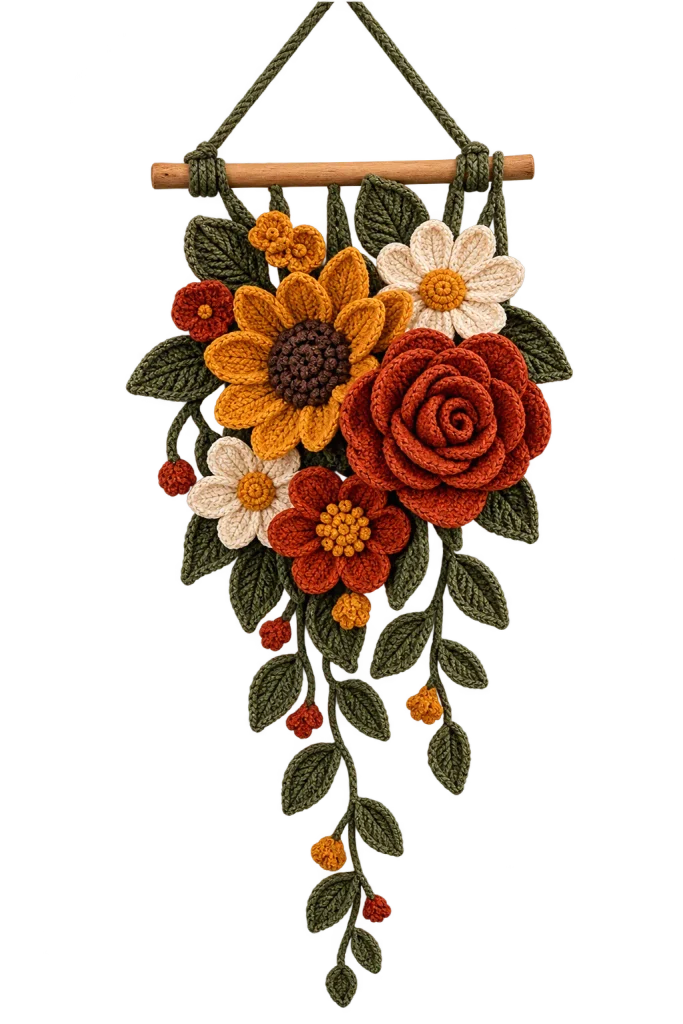
For a calmer look, pick one flower type in two or three shades of the same color family. A row of cream and soft gray blooms on a console table feels intentional and quiet, while a mix of orange, mustard, and rust flowers brings in an autumn warmth.
Bedroom
Bedrooms call for softer, lower-key decor. A few stems in a small vase on the nightstand, or a single flower pinned to a lampshade ribbon, adds color without competing with the bedding.
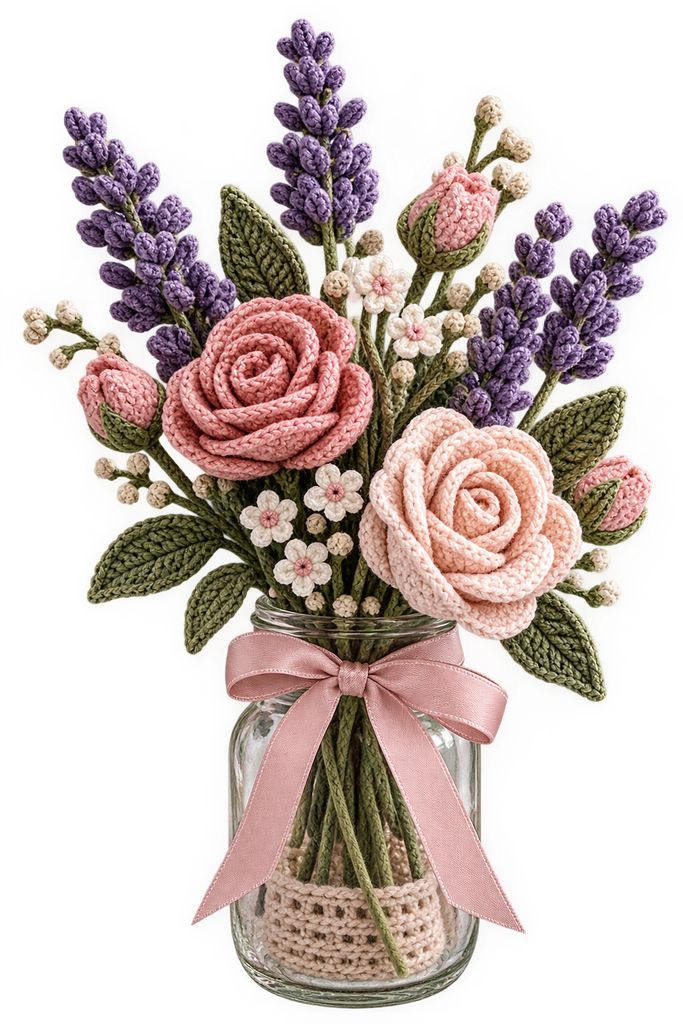
A crochet flower wall hanging over the headboard can turn a plain wall into the room’s main feature. Lavender, blush pink, and pale green create a restful, garden-morning feel. If the room already has patterned bedding, stick to solid-colored flowers so the space stays calm.
Dresser tops and vanity tables are good places for a small bouquet in a ceramic jar. Tie a ribbon around the jar to match the room’s accent color.
Kitchen
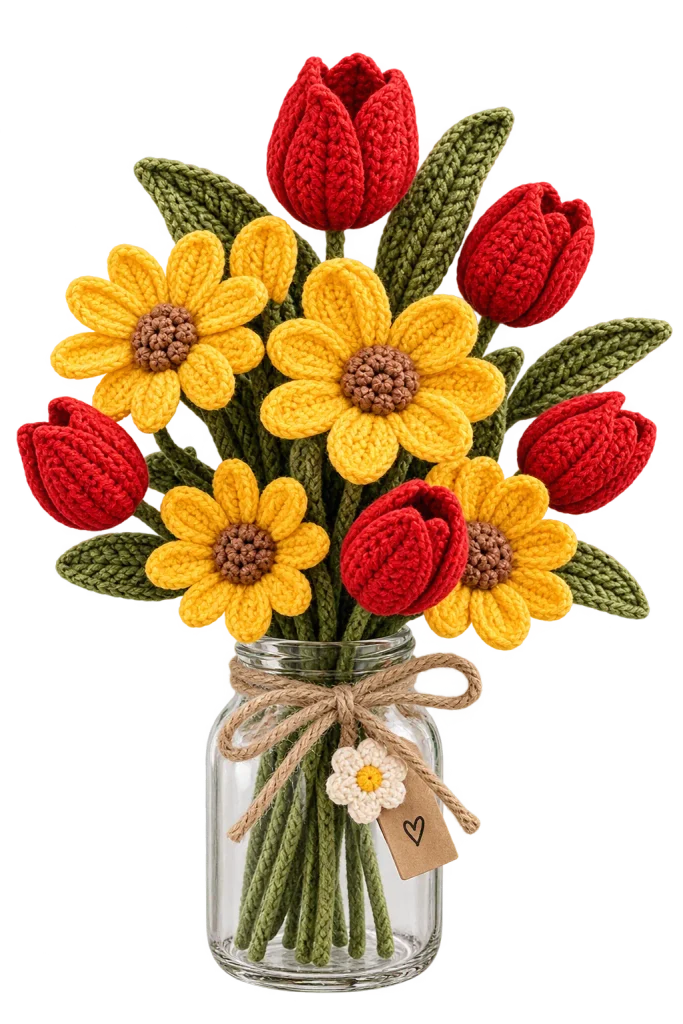
Kitchens welcome cheerful, small-scale decor. A tiny vase of crochet daisies or tulips on the windowsill above the sink brings in sunshine even on gray days. Little flowers tucked into a jar of wooden spoons, or a short row of blooms along a shelf of cookbooks, keep the space feeling friendly.
Keep pieces away from the stove, splatter zones, and steam. Yarn absorbs cooking smells and grease, so the best spots are windowsills, open shelves at a distance from the range, and the ends of counters where nothing gets sprayed or spilled.
Bright yellows, tomato reds, and fresh greens suit kitchens well. If your cabinets are white or light wood, a bold flower color will stand out nicely.
Dining Room
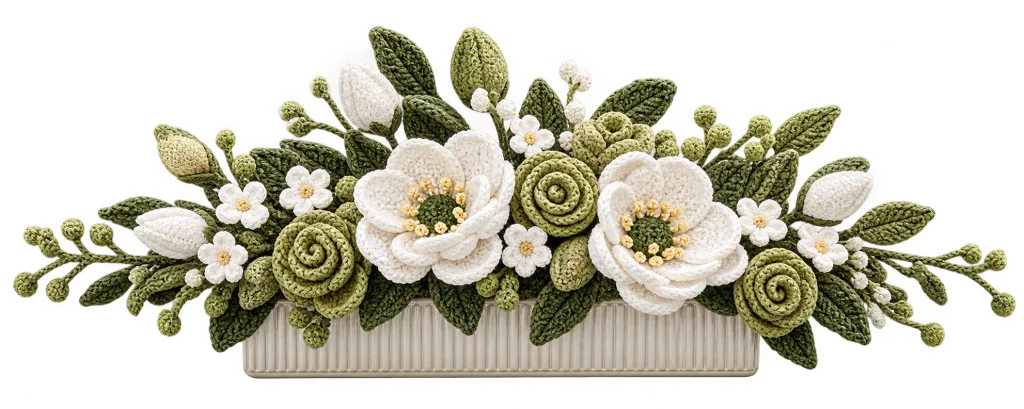
A dining table asks for a centerpiece, and a crochet flower arrangement solves the usual problem of buying fresh flowers every week. Choose a vase low enough that guests can see each other across the table, or use a long, narrow arrangement running down the middle as a table runner of blooms.
For everyday meals, a modest jar of mixed flowers is enough. For holidays, you can restyle the same base with seasonal colors: deep reds and creams for winter, pastels for spring, warm oranges for fall. Small crochet flowers can also tie onto napkin bundles or sit at each place setting as a keepsake.
A sideboard or buffet is another spot worth styling. A pair of matching vases, one at each end, gives the surface balance.
Bathroom
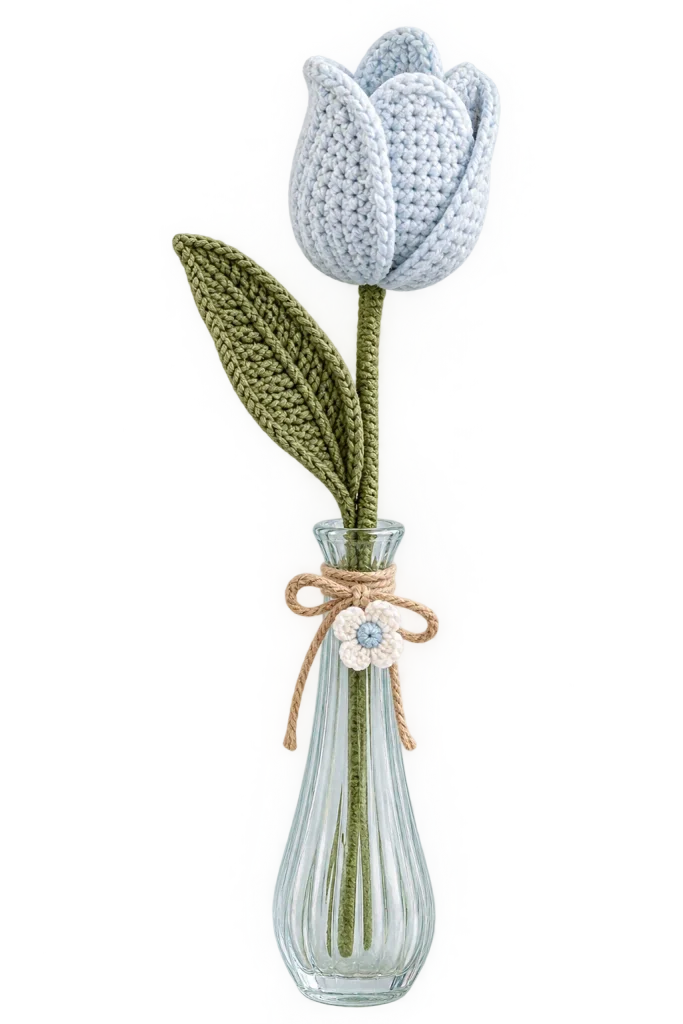
Bathrooms are humid, so the trick is placement. Keep crochet flowers on a shelf, a window ledge, or the back of the toilet tank area, away from direct showers and splashing water. A single stem in a slim bud vase is often all the room needs.
Soft blues, whites, and sage greens give a spa-like impression. If the bathroom is small, one tiny arrangement beats several scattered pieces. Open the door or window regularly so moisture doesn’t linger, and consider rotating the flowers out occasionally so they stay fresh-looking.
Entryway
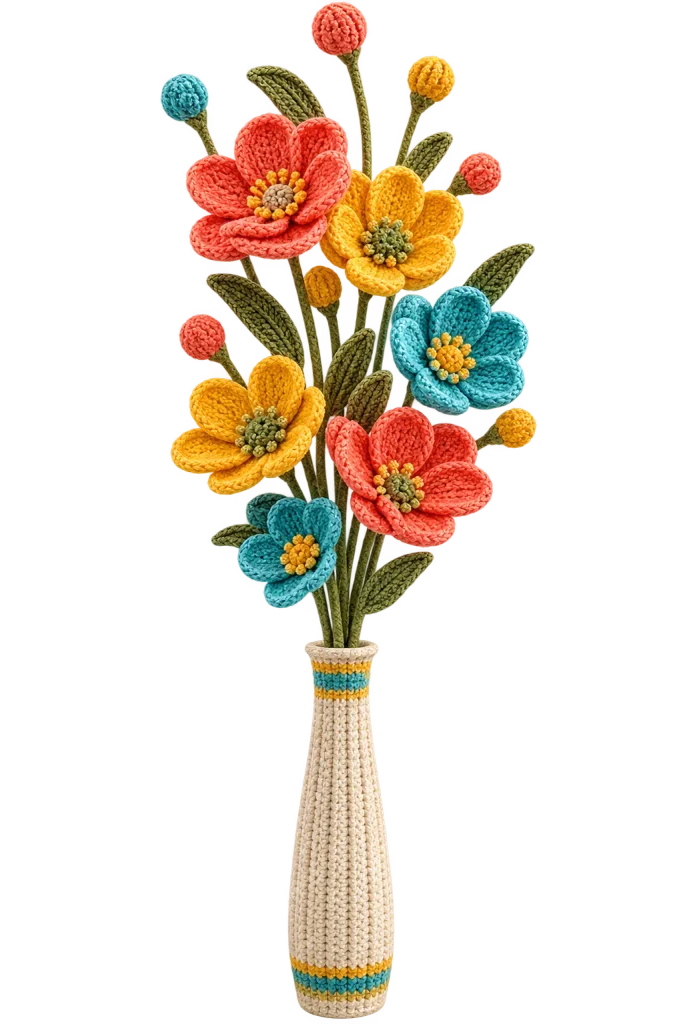
The entryway is where visitors form their first impression, so a welcoming arrangement helps. A small bouquet on a console table beside a mirror is a classic setup. Add a bowl for keys, and you have a tidy little landing spot.
A crochet flower wreath on the front door or a wall hanging beside the coat hooks announces the handmade spirit of the home right away. Because entryways often lack natural light, brighter colors like coral, sunny yellow, and turquoise read well even in dim corners.
If your entry is narrow, choose vertical arrangements: tall stems in a slim vase take up little floor or table space.
Home Office
A home office can feel sterile, and a touch of yarn florals softens it. A small vase beside the monitor, or a couple of flowers in a pencil cup, gives your eyes something gentle to rest on between tasks.
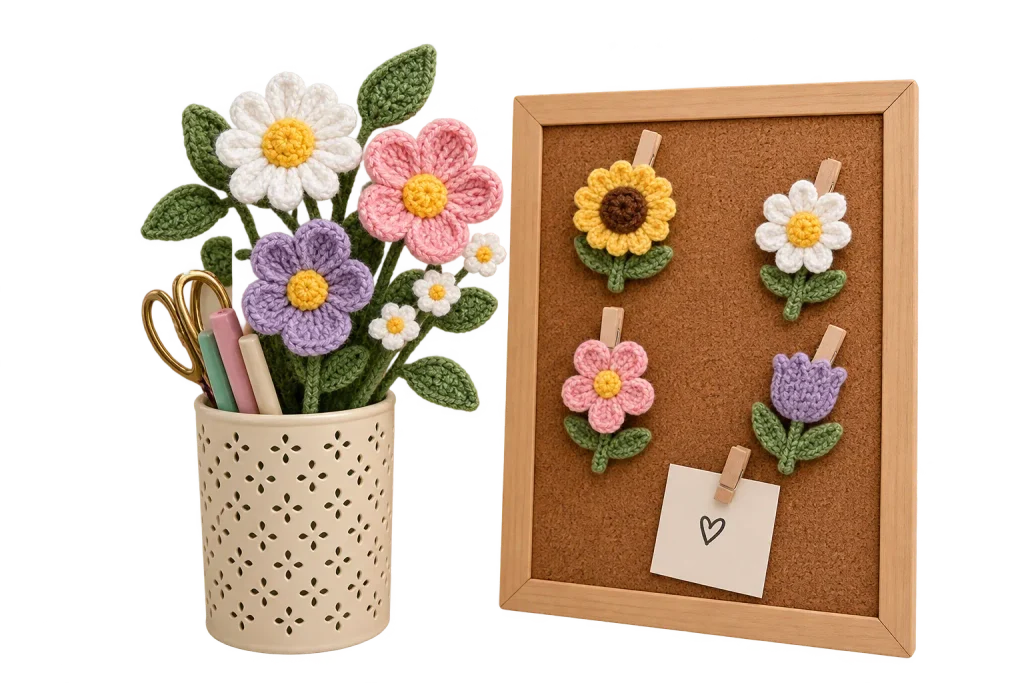
Choose colors that support the mood you want. Greens and blues feel calm and focused, while yellow and orange add energy. Small crochet flowers pinned to a corkboard or clipped to a bulletin board make useful decor that doubles as organization, since they can mark important notes or photos.
Keep the desk surface mostly clear. One compact arrangement usually beats several scattered pieces.
Shelves and Bookcases
Crochet flowers for shelves are some of the easiest decor pieces to place, because shelves already invite small, collected objects. Tuck a mini bouquet in a jar between rows of books, lay a loose flower on top of a stack, or line up three small pots along the edge of a floating shelf.
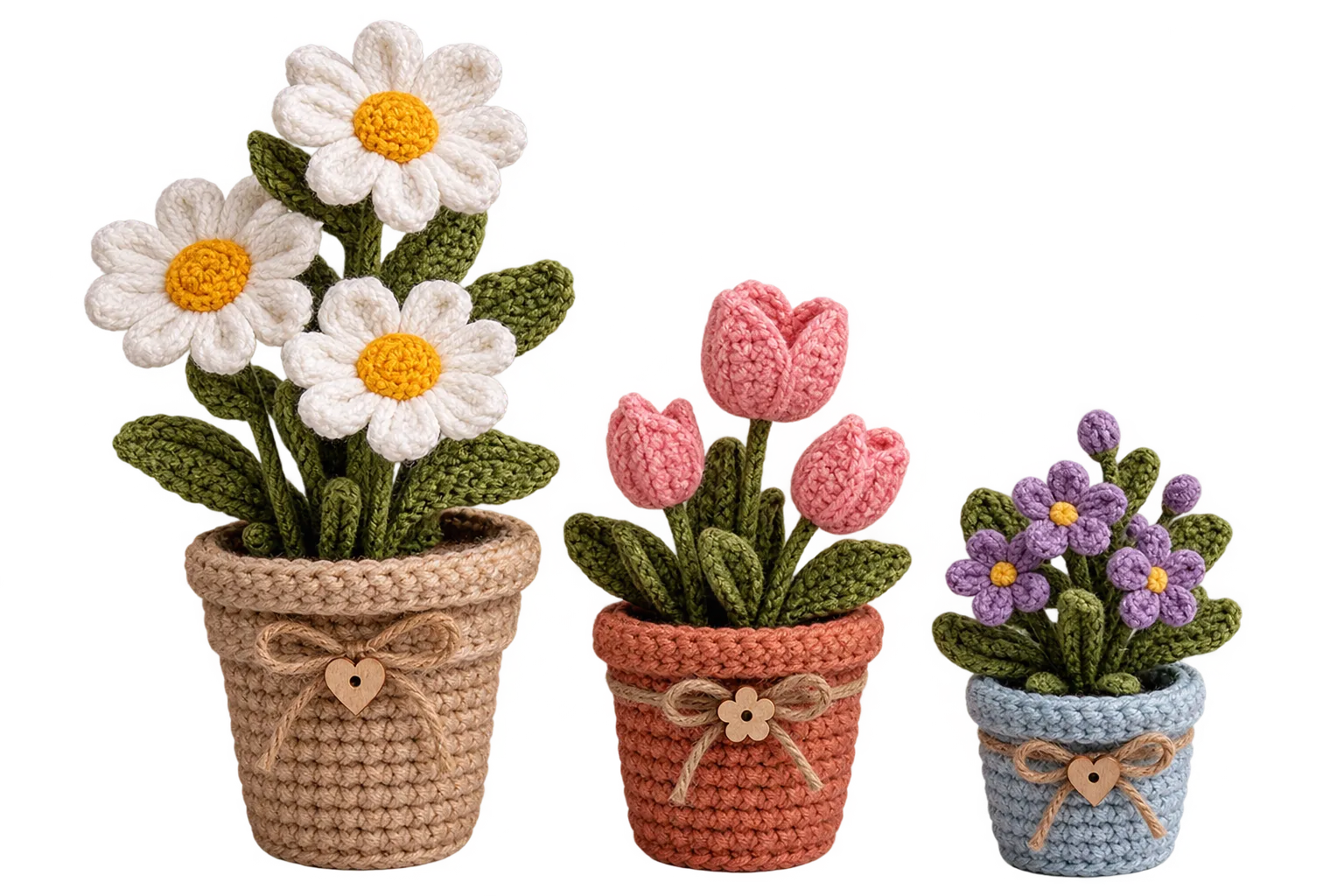
Vary height and scale. A tall stem next to a short one creates rhythm, and a flower resting against a book spine adds a casual, lived-in feel. Leave some empty space around each piece so it can be seen. If a bookcase is very full, one bright flower cluster can work as a focal point instead of adding many little items.
Neutral shelves let colorful flowers pop. Dark wood shelves look striking with cream, white, and pastel blooms.
Bouquets for Tables and Centerpieces
Bouquets are the most visible way to use crochet flowers, and they work best when planned as an arrangement instead of a random pile. Start with a focal flower, such as a large sunflower or peony-style bloom, then surround it with smaller fillers like daisies or little buds. Add leaves and greenery to give the bouquet structure.
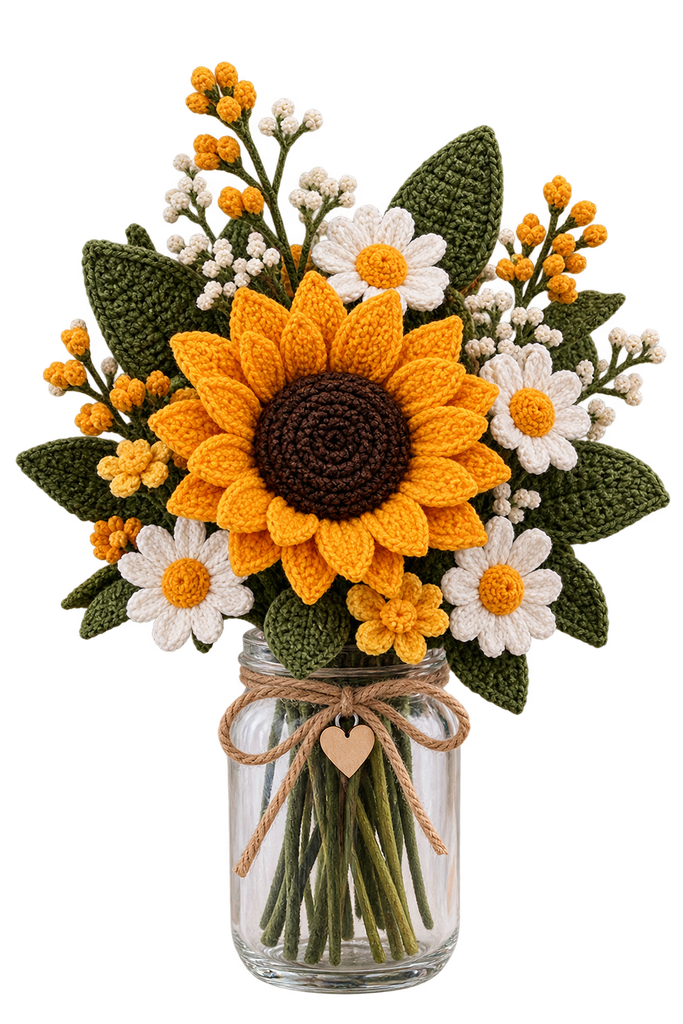
Try a monochrome bouquet for a modern look, such as all white with green leaves. For something more playful, mix rainbow shades in a clear glass jar. A crochet flower vase arrangement in a ceramic pitcher gives a farmhouse feel, while a slim metal vase leans more contemporary.
For tables, consider height. Anything above eye level blocks conversation, so keep centerpieces compact or use a slender vase.
Wreaths for Doors and Walls
A wreath gives crochet flowers a circular frame and a clear seasonal identity. A spring wreath might cluster pastel blooms on one side of a plain base, leaving the rest open for an airy look. An autumn version might layer rust, mustard, and cream flowers thickly all the way around.

Wreaths aren’t limited to front doors. Hang one on a bedroom wall, over a mantel, or inside a hallway. If you plan to use it on a door, an entry that’s sheltered from rain and direct sun will keep the yarn looking its best.
A wreath can also work as a base for changing decor. Swap in new flowers as the seasons shift and you have one piece that feels different all year.
Garlands for Seasonal Decor
Garlands bring movement. A row of small blooms strung along a mantel, a window frame, or a curtain rod adds color where other decor can’t reach. They’re also flexible: a garland can be swagged, draped across a shelf, or hung straight down a wall.
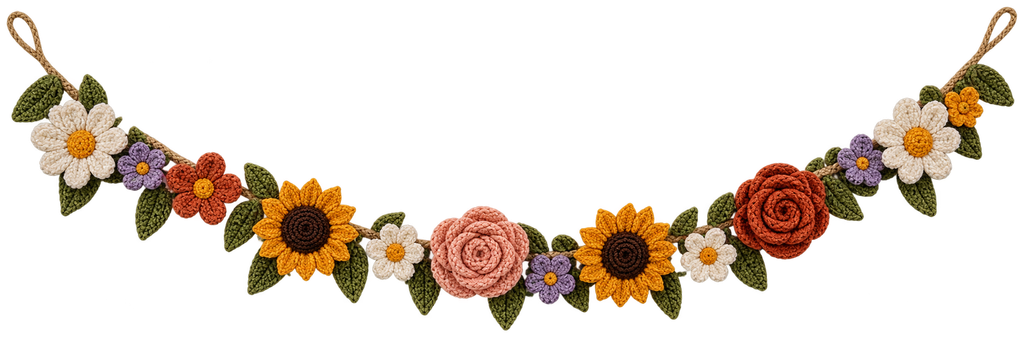
Seasonal shifts are easy. Soft pinks and yellows announce spring. Reds and greens feel festive in December. Warm oranges and golds carry through autumn. A neutral garland with cream and beige flowers can stay up nearly year-round.
Mixing flower sizes makes a garland more interesting than repeating one identical bloom, and adding leaves between flowers keeps the line from looking too busy.
How to Choose Crochet Flower Colors for Your Home
Start with what’s already in the room. Look at your largest surfaces, such as walls, rugs, and sofas, then pick flower colors that either match or contrast in a deliberate way.
- Matching tones: Flowers that echo a pillow or rug feel cohesive and calm.
- Complementary contrast: Yellow flowers against a blue wall, or coral against teal, create a bright, fresh look.
- Neutral palettes: Cream, white, gray, and tan keep a room quiet and let texture do the work.
- Bold accents: In a mostly neutral space, one strong color like deep red or bright orange becomes the eye-catching detail.
Yarn shade can look different in natural light versus lamplight, so hold your yarn near the space before committing to a full arrangement.
How to Display Crochet Flowers Without Making a Room Look Cluttered
The easiest way to avoid clutter is to group flowers instead of scattering them. Three arrangements clustered on one surface look deliberate, while three arrangements spread across three rooms’ worth of small tables can look busy.
Give each piece breathing room. Leave empty space around a vase, and don’t crowd a shelf edge to edge. Odd numbers, such as three vases or five flowers, tend to look more natural than even ones.
Stick to a limited palette. Two or three main colors, repeated across the room, tie everything together. And remember that rotating decor keeps things fresh, so you don’t need every flower on display at once.
Best Crochet Flowers for Different Home Decor Styles
Farmhouse and cottage: Daisies, sunflowers, and wildflower-style blooms in muted, earthy colors, displayed in mason jars or ceramic pitchers.
Modern and minimalist: Simple tulips or single-color roses in slim vases, using white, black, or one accent color.
Boho: Mixed flowers in warm terracotta, mustard, and cream, paired with woven baskets and macramé.
Vintage and romantic: Roses and peony-style blooms in dusty pinks, mauves, and ivory, arranged in antique-looking containers.
Scandinavian: Muted pastels and soft neutrals, kept sparse and light, with a lot of white space around each piece.
Matching flower shape to style matters as much as color. Structured blooms suit tidy interiors, while loose, wildflower-like shapes feel more relaxed.
How to Care for and Store Crochet Flower Decor
Crochet flowers need less care than fresh ones, but they aren’t maintenance-free. Dust them regularly with a soft brush or a gentle pass of a hair dryer on a cool setting. If a piece gets dirty, spot clean it gently and let it dry fully before displaying it again.
Keep decor out of strong, direct sunlight, since yarn colors can fade over time. Avoid damp or greasy spots where they’d absorb moisture or odors.
To store flowers between seasons, place them in a breathable container or box with tissue paper so the petals keep their shape. Avoid sealing them in tight plastic, and don’t press heavy items on top.
Easy Crochet Flower Projects to Start With
If you want to make your own decor, start with simple, flat flowers. Small daisies and other single-layer blooms are generally quicker than more sculptural flowers like layered roses, and they’re forgiving if your stitches are a little uneven.
A few low-pressure first projects:
- A handful of small flowers to tuck into a jar
- A short garland of repeated mini blooms
- A single stem for a bud vase
- A few flowers to attach to a plain wreath base
Once you feel comfortable, you can move on to bigger blooms, then build a full bouquet or wall hanging. Working on several small pieces first also helps you learn which colors and sizes you like best in your own home.
Frequently Asked Questions
Can crochet flowers be used in any room of the house?
Yes, though placement matters. Kitchens and bathrooms need spots away from steam, grease, and splashing water. Living rooms, bedrooms, and offices are the easiest places to start.
What is the easiest way to display crochet flowers?
A jar or vase is the simplest option. Even a few stems in a glass jar can look polished, and you can rearrange them any time.
How do I keep crochet flower decor from looking childish?
Stick to a limited color palette, choose refined shapes, and pair the flowers with grown-up containers like ceramic vases or metal jars. Restraint helps more than anything else.
Do crochet flowers fade in sunlight?
Yarn can fade over time with strong, direct sun, so display them where light is softer or filtered.
Can I mix crochet flowers with real plants?
Absolutely. A crochet bloom tucked among real greenery can add a lasting pop of color, though you’ll want to keep the yarn away from wet soil and watering.
Do crochet flowers make good gifts for a home?
They do, especially as housewarming gifts. A small arrangement in a vase or a wreath gives the recipient something handmade that lasts.
[…] Crochet Flower Home Decor Ideas for Every Room […]