

Pattern & Copyright Note: Crochet patterns may vary slightly depending on your yarn, hook size, and personal tension. Use the measurements and instructions as a guide, and adjust your tension as needed. This CrochetFloria tutorial, including its instructions, photos, and original content, is protected by copyright. You’re welcome to make the finished project for personal use or as a gift. Please do not copy, republish, or redistribute the pattern or photos. To share it, please link to the original CrochetFloria article.
Affiliate Disclosure: We earn from qualifying purchases made through the affiliate links in this article, at no extra cost to you. We only recommend products that may be useful for your crochet projects.
A crochet daisy applique is one of those small projects that earns its place in a yarn stash far beyond what its size suggests. A single flower, worked in an evening and barely using any yarn, can transform a plain granny square, dress up a hat, or turn a basic headband into something that looks deliberately designed. That’s really the appeal of appliques in general: a small amount of focused stitching that changes how an entire finished piece reads.
This guide isn’t a stitch-by-stitch daisy pattern. If you’re looking for that, CrochetFloria’s How to Crochet a Daisy Step by Step walks through the full construction. What this article covers instead is everything around the appliqué itself: what it is, how to size it for different projects, where it works well, and how to join several into a daisy chain for a bigger seasonal statement.
Crochet Supplies Quick Links
Explore useful supplies and tools for your crochet projects. These shopping links make it easier to find materials and accessories for your next handmade creation
- Cotton Yarn – Find cotton yarn in different colors for your flower.
- Cotton 8 Yarn – Browse yarn options for small crochet projects.
- Crochet Hooks – Find the right hook for your crochet work.
- Floral Wire – Useful for shaping petals and making flower stems.
- Green Florist Tape – Wrap and finish your crochet flower stems.
- Shop LoveCrafts – Discover more yarn and craft supplies.
Save This on Pinterest!
No time to read this Crochet Daisy Flower Appliques? Click on the save button and pin it for later!
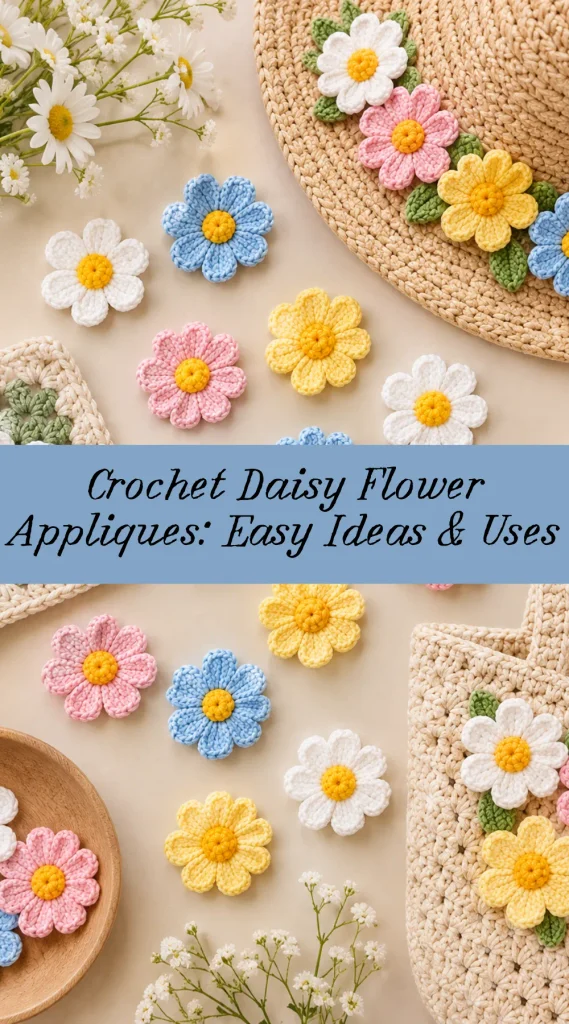
What Is a Crochet Daisy Flower Applique?
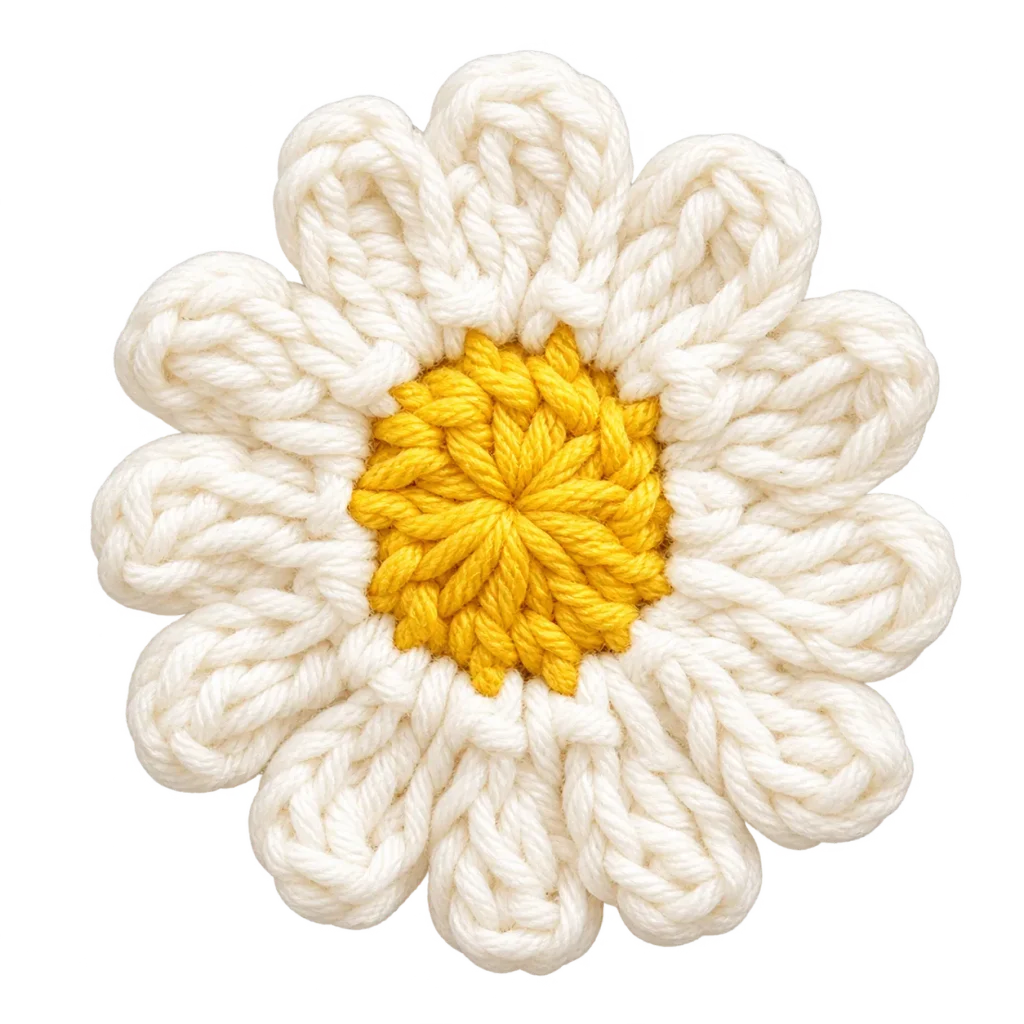
An applique, in crochet terms, is a small motif made separately from the main project and then sewn or attached afterward as decoration. A crochet daisy applique is simply a small daisy flower made this way: stitched on its own, then added to something else rather than being built directly into the piece.
This is different from working a flower motif directly into a garment or blanket as you go. An appliqué gives you flexibility a built-in motif doesn’t. You can make a batch of daisies ahead of time, decide on placement later, and move them around before committing to where they’ll sit. It also means one small flower pattern can be reused across dozens of different projects, since the appliqué itself doesn’t care what it’s being attached to.
Take a Look:
- How to Crochet a Sunflower for Home Decor and Gifts
- How to Crochet a Rose: Easy Step-by-Step Flower Tutorial
- How to Crochet a Tulip: Easy Step-by-Step Flower Pattern
What You Need to Make Crochet Daisy Appliques
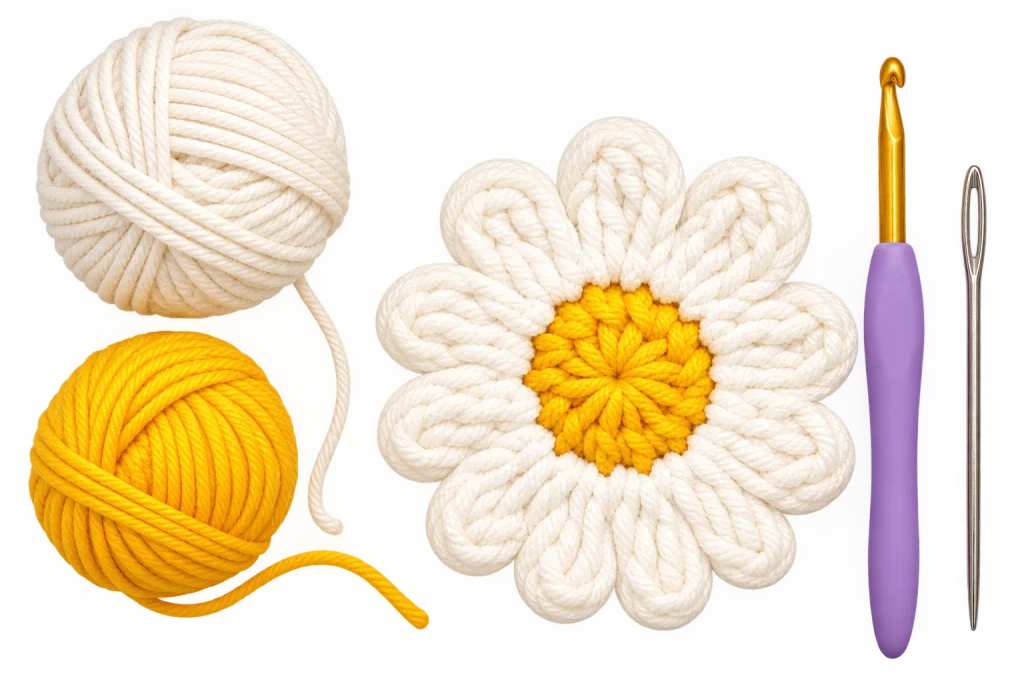
The materials list for a daisy appliqué is short, which is part of why this is such an easy project to start without planning:
- A small amount of yarn in your chosen color (or colors, if you’re using a contrast center)
- A crochet hook sized appropriately for your yarn
- A tapestry needle for weaving in ends and sewing the finished appliqué to your project
Because the amount of yarn needed per flower is small, this is a genuinely good scrap-yarn project. Leftover yarn from a larger blanket or garment is often enough for several daisies, which makes appliques a practical way to use up small amounts of yarn that aren’t quite enough for anything bigger.
Choosing the Right Yarn and Hook Size
Daisy appliques are forgiving when it comes to yarn choice. Any yarn weight can work, from fine fingering weight up through worsted and beyond, as long as you pair it with a hook sized appropriately for that yarn. What changes is the finished look and scale of the flower, not whether the technique works.
A finer yarn with a smaller hook produces a delicate, detailed daisy well suited to smaller accessories like headbands or the corner of a granny square, where you don’t want the flower to overwhelm the piece. A heavier yarn with a larger hook produces a bolder, more visible daisy, which can work well on something like a hat or bag where you want the appliqué to read clearly as a focal point rather than a subtle detail.
It’s worth swatching a single flower before committing to a yarn and hook combination for a bigger project, especially if you’re planning a daisy chain or multiple appliques for one piece. Seeing the actual finished size on your hook tells you more than guessing from the yarn label alone, since tension varies enough between crocheters that two people using the same yarn and hook can still end up with noticeably different-sized flowers.
How Big Are Crochet Daisy Appliques?
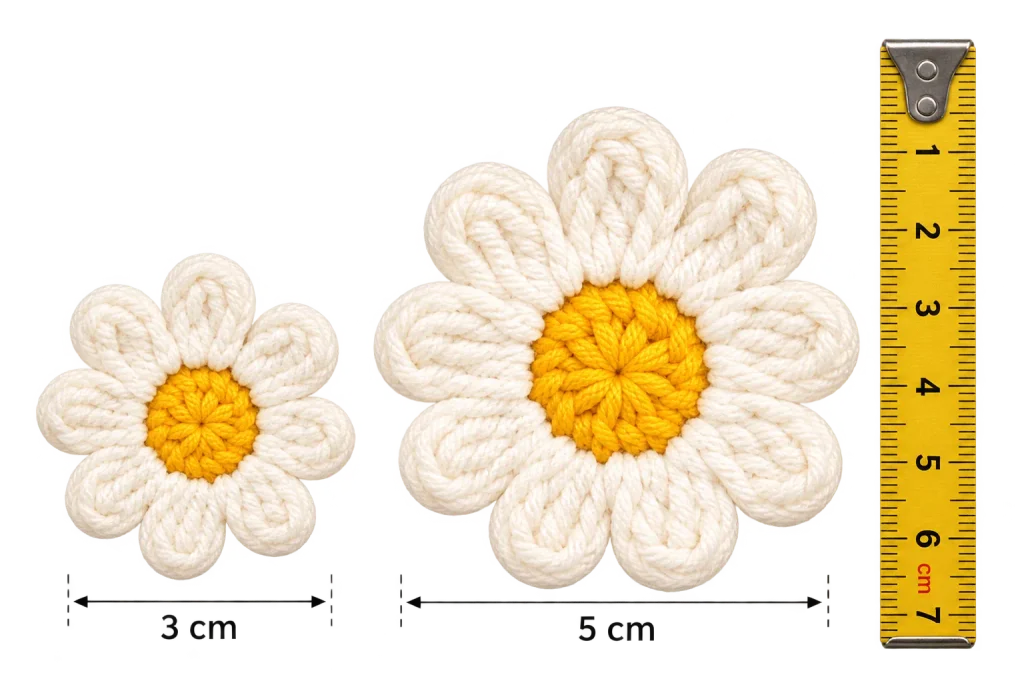
Finished size depends entirely on the yarn weight, hook size, and your personal tension, so there’s no single correct measurement for a daisy appliqué. As a general example, using a DK (light worsted, weight 3) yarn with a 3.5mm hook, a small daisy comes out to around 1.2 inches (3cm) across, while a slightly larger version made with a few more stitches measures closer to 2 inches (5cm).
These numbers are a useful starting reference rather than a fixed rule. If your tension runs tighter or looser than average, or if you adjust the yarn and hook pairing, your actual measurements will shift accordingly. The practical takeaway is to think in terms of small versus large rather than an exact measurement when planning where an applique will go: a small daisy suits a subtle accent on a headband or the corner of a square, while a larger one holds its own as a standalone decoration on something like a hat or bag.
Creative Ways to Use Daisy Appliques
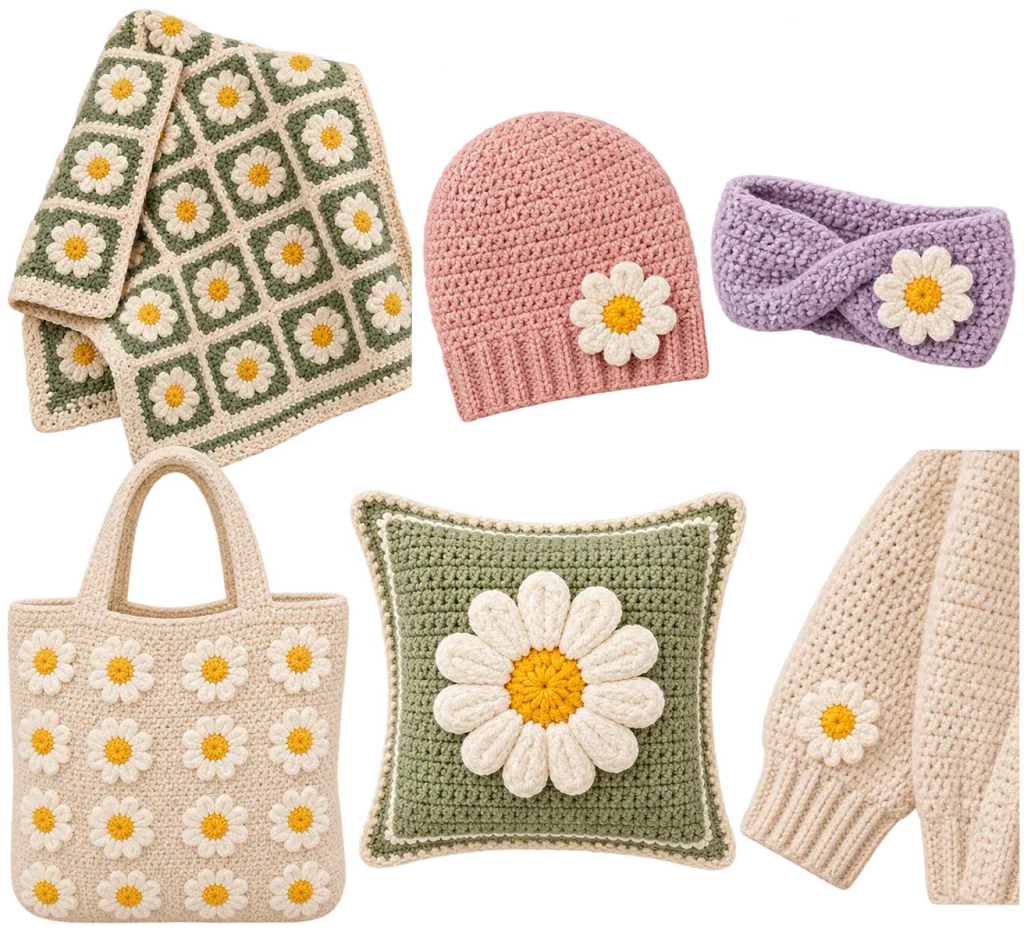
This is really where daisy appliques earn their keep. Because they’re made separately and attached afterward, the same small flower pattern can show up across a huge range of projects:
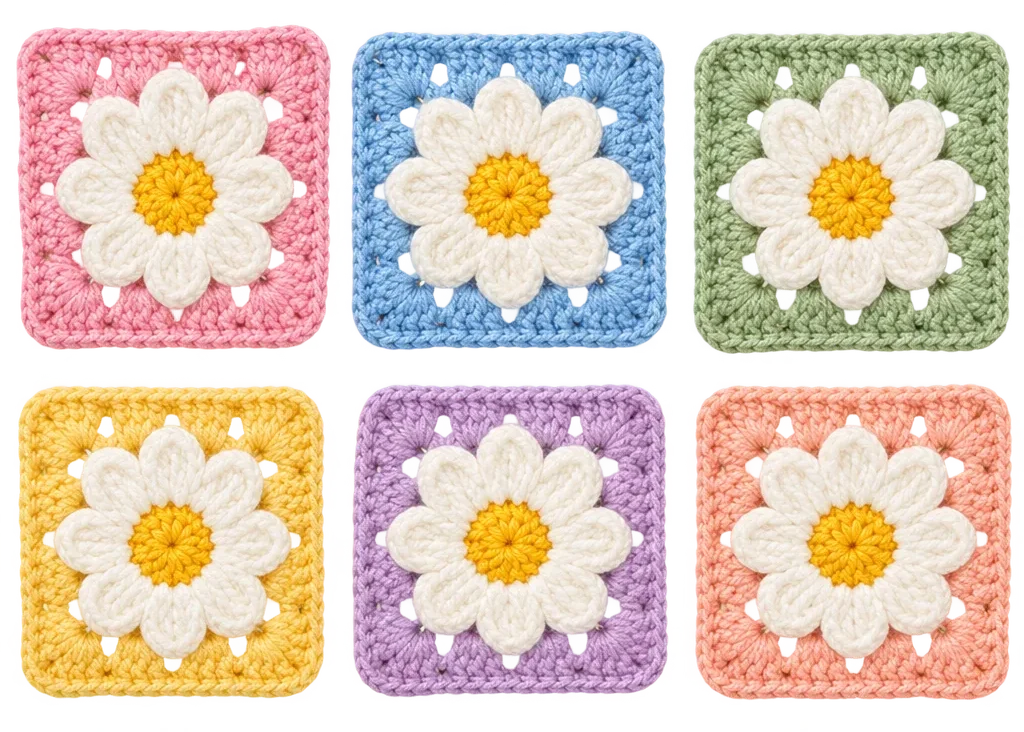
Granny squares. A single daisy centered on a square, or scattered across a few squares in a blanket, adds a floral detail that a plain granny square pattern doesn’t offer on its own.
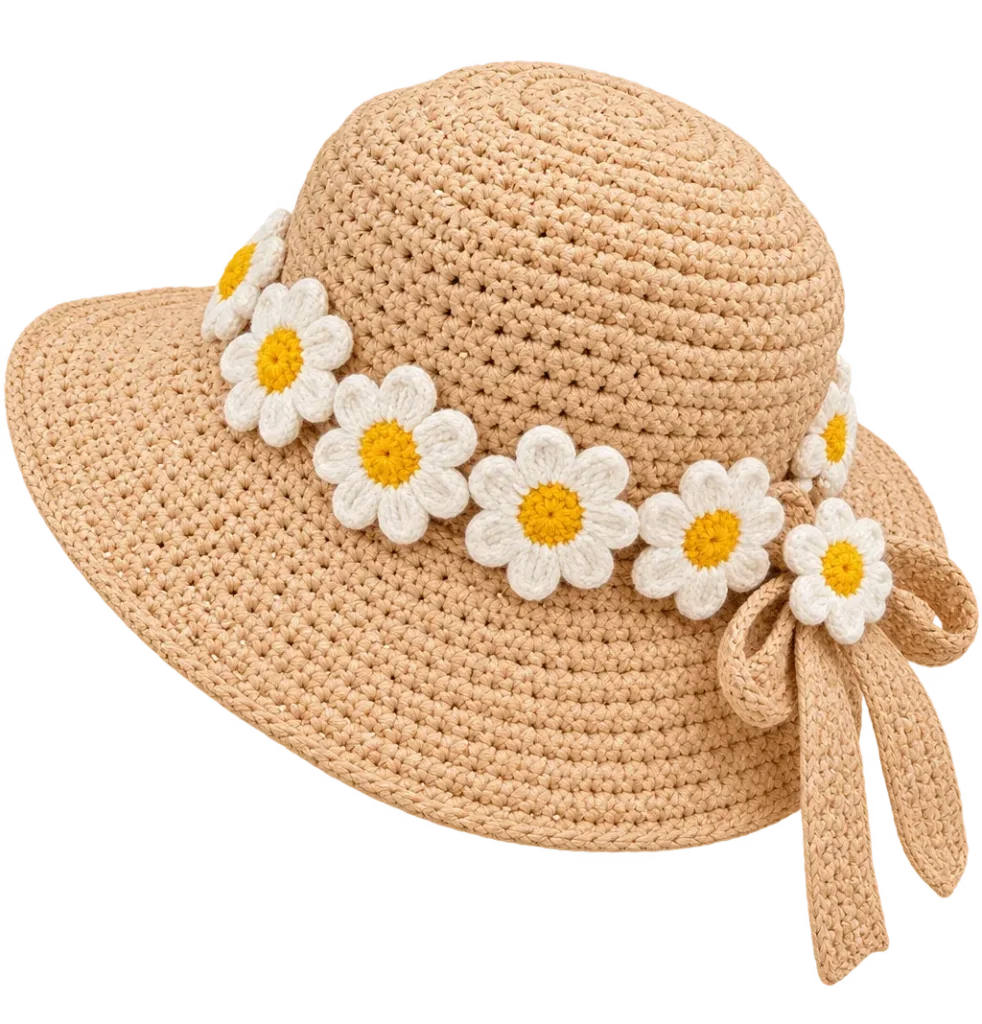
Hats. One or two daisies along a hat’s brim or crown turn a basic beanie into something that reads as deliberately styled rather than plain.
Headbands. A small daisy sewn onto a crochet or fabric headband is an easy way to dress up an otherwise simple accessory, and it’s a project size that works well as a quick handmade gift.

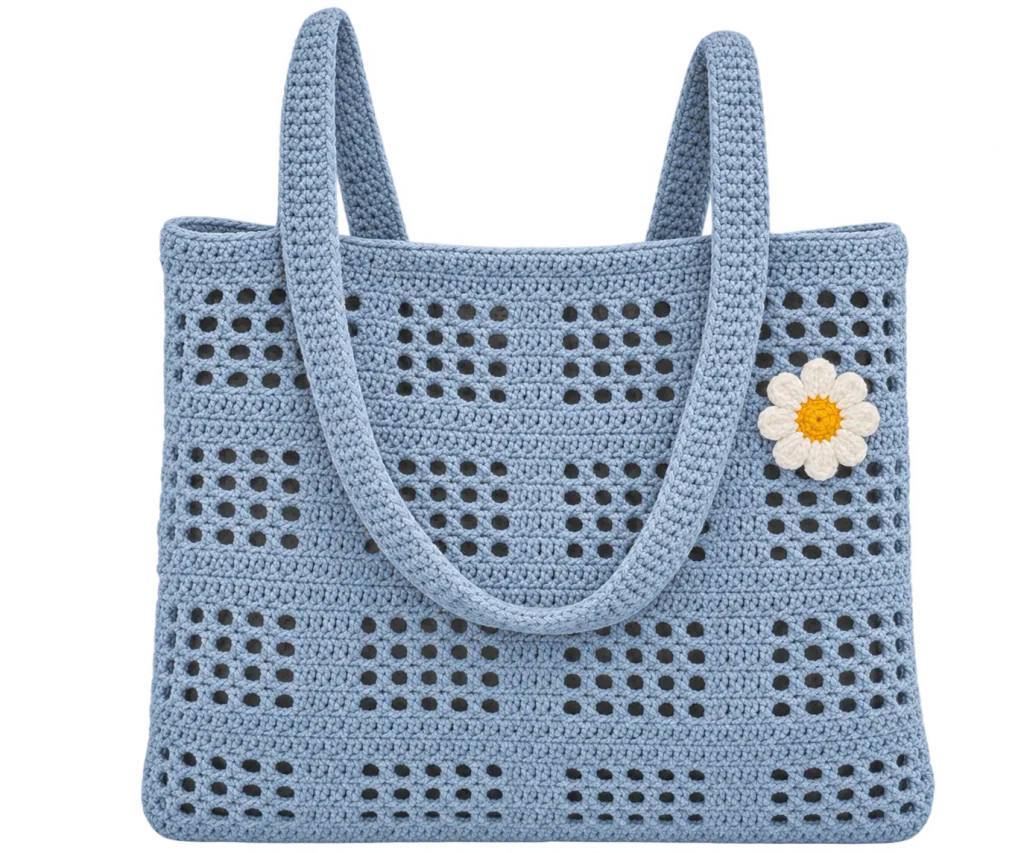
Bags. Appliques on the front of a tote or pouch add a decorative focal point without requiring you to change the bag’s actual construction.
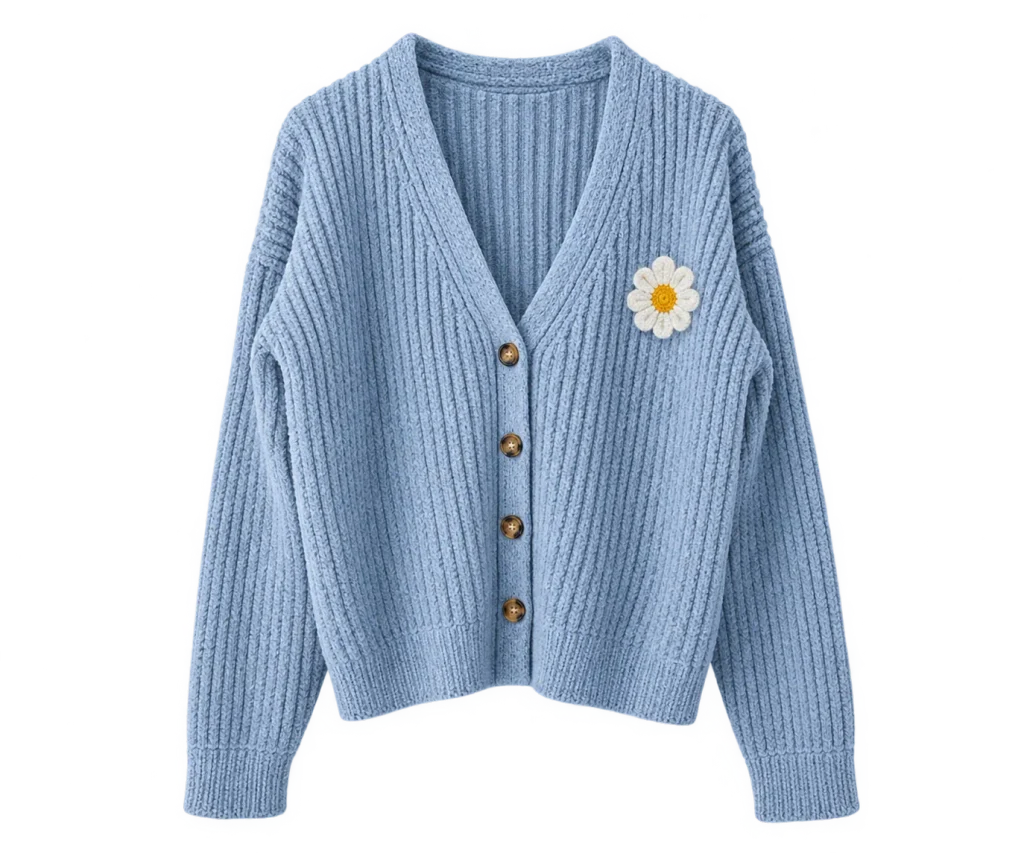
Sweaters and cardigans. A scattering of small daisies along a cuff, collar, or front panel brings a garment closer to a store-bought floral knitwear look, without needing to design a full floral stitch pattern into the garment itself.
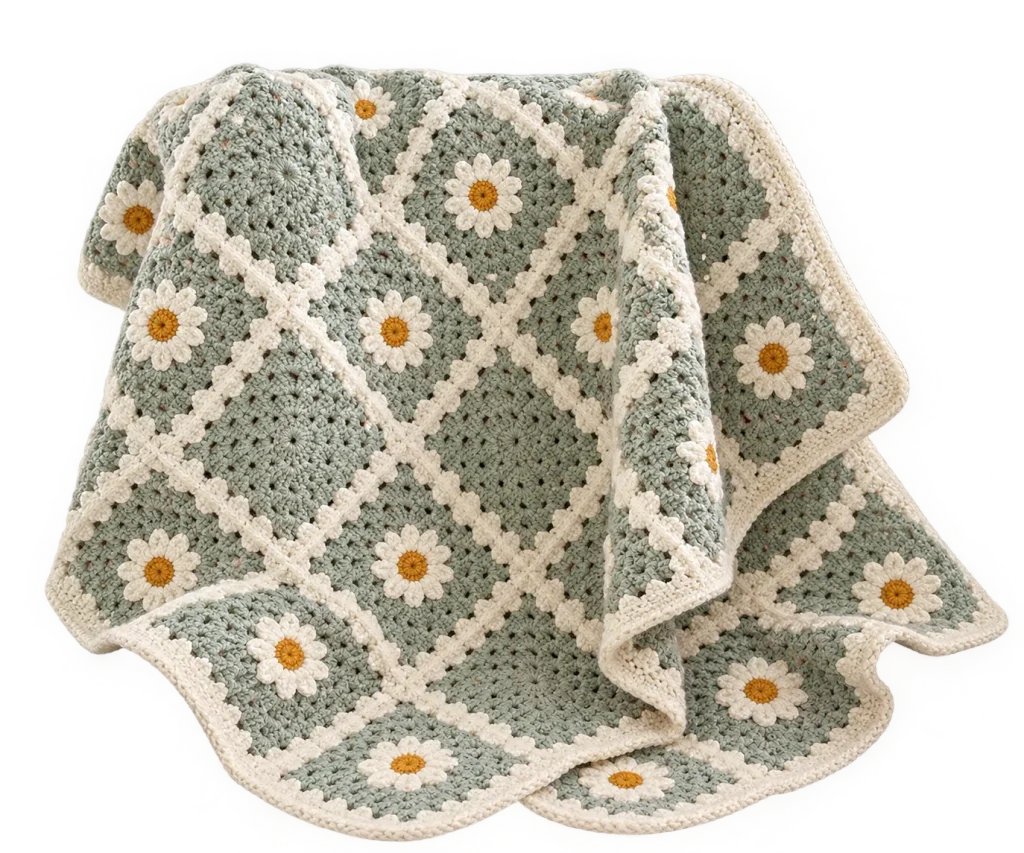
Blankets. Beyond granny squares, daisies can be sewn onto solid panels or borders for a softer, more decorative finish than the blanket’s base stitch pattern alone provides.
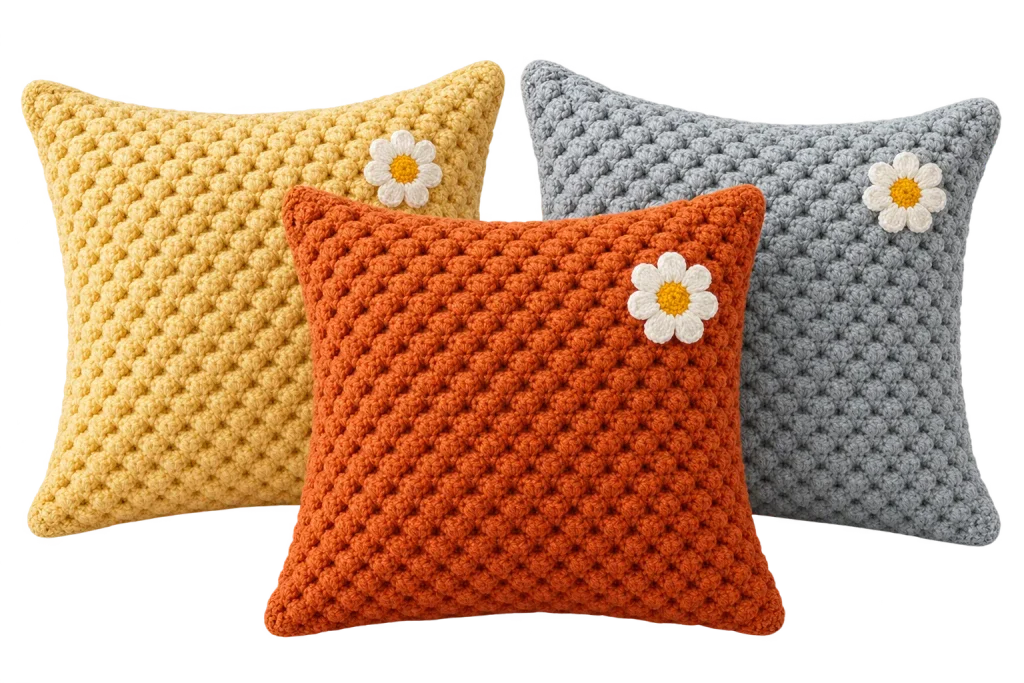
Cushions. A cluster of appliques on a plain cushion cover is an easy way to update a room’s decor seasonally without recovering the whole cushion.
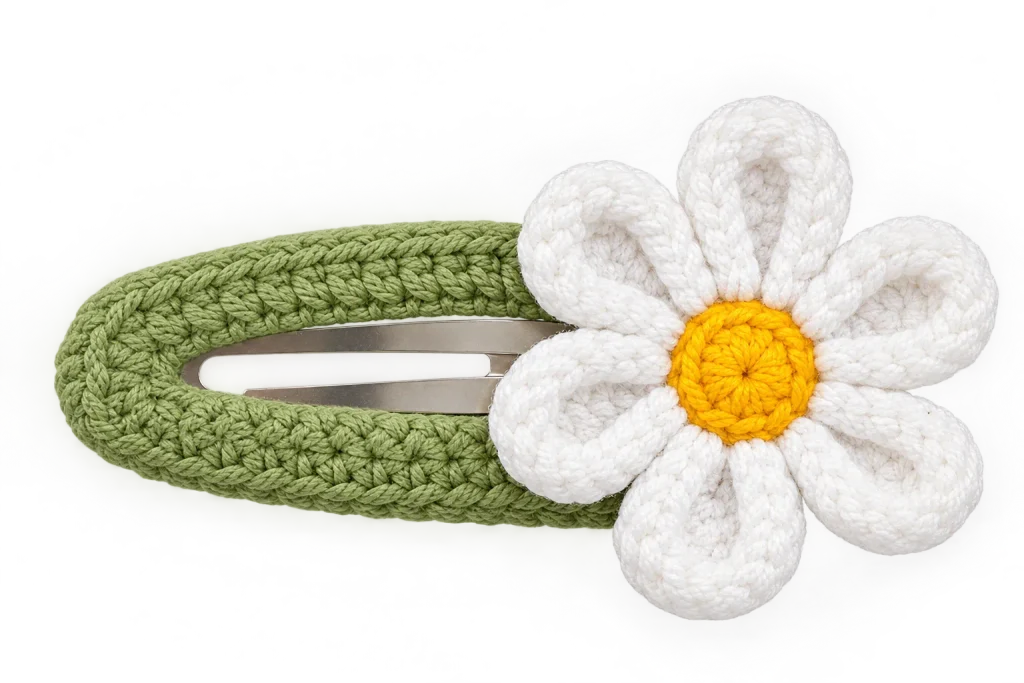
Hair accessories. Beyond headbands, daisies work well sewn or glued onto hair clips, pins, and elastics.
Home decor. Coasters, table runners, and small baskets all take well to a daisy appliqué or two, especially for a spring refresh of a room.
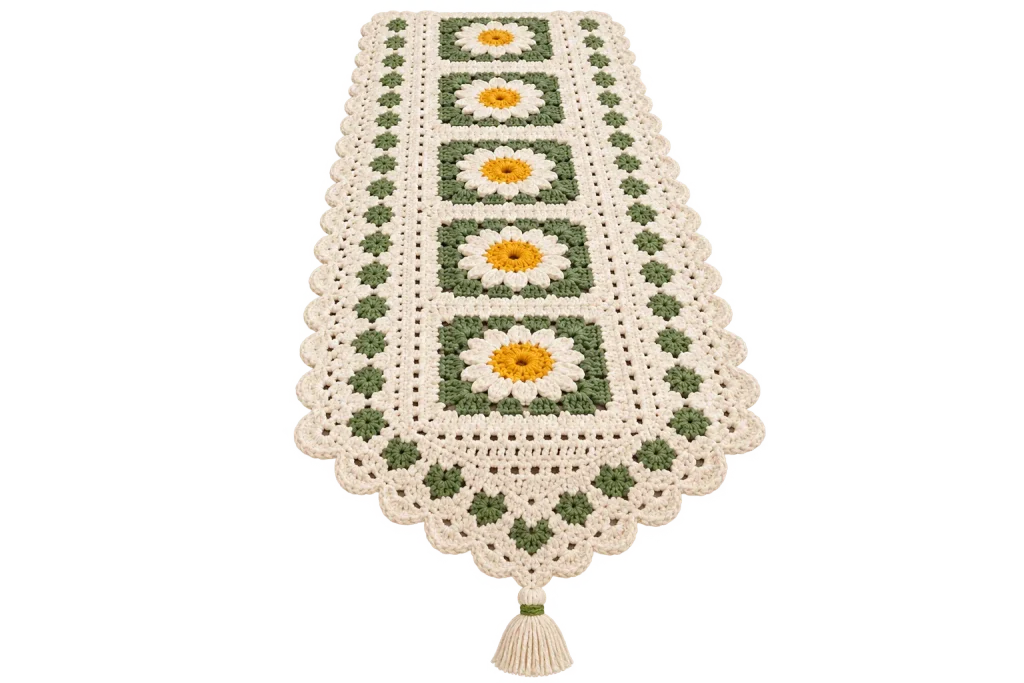
Because appliques are sewn on after the base project is finished, you can also use them to cover small mistakes or uneven spots in a finished piece, which is a practical bonus beyond the purely decorative appeal.
Crochet Daisy Appliques for Spring and Summer
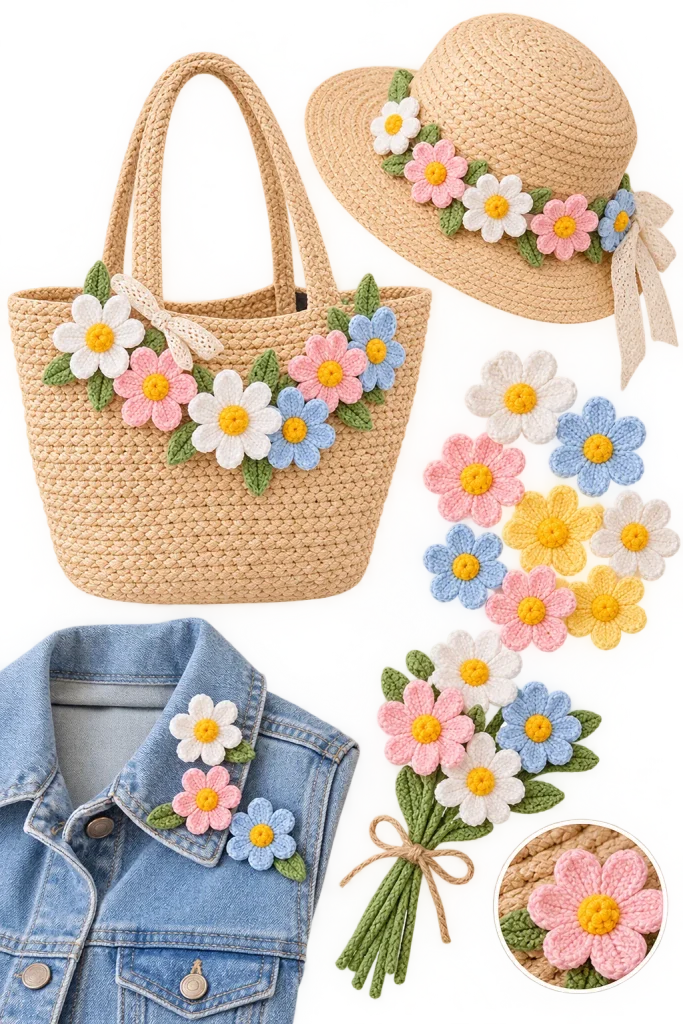
Daisies have an obvious seasonal association, and that makes them a natural choice for spring and summer crochet projects specifically. Light, soft colors- white and yellow, pale pink, cream, light blue- all read as fresh and seasonal in a way that feels different from the deeper, warmer palettes typical of fall and winter crochet.
Because appliques are small and quick, they’re also a practical way to refresh existing pieces for the season rather than starting something new. Adding a few daisies to a plain tote bag or a basic sun hat is a much smaller project than crocheting either item from scratch, but it still gives a noticeably seasonal result. This also makes daisy appliques a good option for last-minute spring gifts, like dressing up a plain purchased headband or hair clip with a handmade flower.
How to Make a Crochet Daisy Chain

A daisy chain takes the single applique concept further by joining several small daisies together into one continuous decorative strand. The general idea is straightforward: once you have a number of individual daisy motifs made, you connect them edge to edge, either by crocheting a short chain or slip stitch connection between each flower, or by sewing them together directly with a tapestry needle.
The spacing and connection method you choose will affect how the finished chain drapes. A tighter connection between flowers creates a denser, more solid-looking strand, while a slightly longer connecting chain between each daisy lets the chain hang more loosely, closer to how a real flower garland moves.
Daisy chains work well as a trim along the edge of a blanket or garment, as a standalone garland for seasonal home decor, or layered into a headband or crown shape for photos and spring gatherings. Because each flower is small, a daisy chain is also a good project to work on in short sessions, adding one flower at a time rather than needing to commit to a long single sitting.
Tips for Attaching Crochet Daisy Appliques
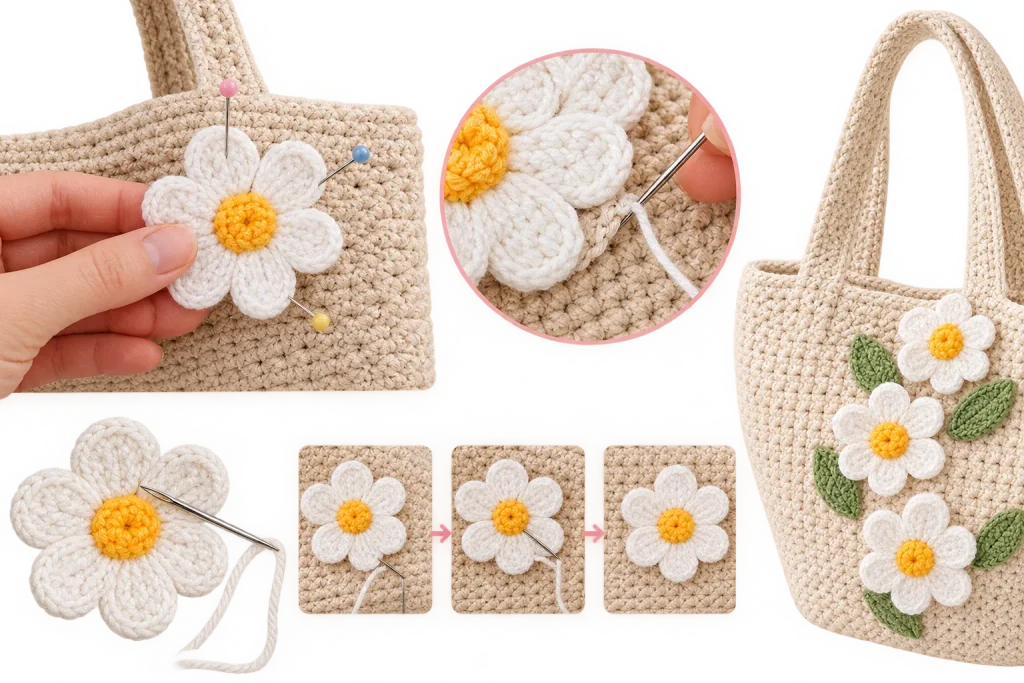
How you attach an applique matters almost as much as how you make it. A few habits make a real difference in how neat and secure the finished result looks:
Plan your placement before you sew. Lay the appliqué on the project and move it around, pinning it in place if needed, before committing to stitching it down. It’s much easier to reposition a pinned flower than to unpick and resew one.
Use a whip stitch or similar small, even stitch around the edge. Keeping your stitches close together and consistent in size gives a cleaner finish than large, widely spaced stitches, and it also secures the appliqué more firmly against snagging or pulling loose with wear.
Weave in all ends before attaching the flower, rather than leaving loose tails to deal with afterward. It’s much easier to manage yarn ends while the applique is still a flat, standalone piece than once it’s already sewn onto a bigger project.
Keep the applique flat as you sew it down. A daisy that was blocked or pressed flat before attaching will lie smoothly against the base project, while one that’s still curled or cupped can look bumpy once stitched on, no matter how neat the sewing itself is.
Consider a light touch of fabric glue for non-wearable items like coasters or home decor pieces, where a permanent sewn attachment isn’t necessary, and a quick, flat finish matters more.
[…] Crochet Daisy Flower Applique: Ideas and Uses […]
[…] Crochet Daisy Flower Applique: Ideas and Uses […]
[…] Crochet Daisy Flower Applique: Ideas and Uses […]
[…] other flowers go well with a crochet calla lily?Crochet lavender, tulips, and daisies all pair well, since they add contrasting shapes and […]