

Most crochet flowers lean soft and romantic, pastel petals, cheerful centers, the kind of thing you’d put in a spring bouquet without a second thought. Halloween flips that on its head. A crochet flower worked in black, deep purple, or blood orange stops being sweet and starts being striking, which is exactly what makes a spooky floral arrangement so fun to put together.
This list covers ten different flower ideas that lean into that darker, moodier side of crochet florals, from single statement blooms to flowers built specifically to anchor a bouquet. Some are eerie, some are simply dramatic, and a few are just classic flowers reimagined in an unexpected color. Here’s how to think through which ones belong in your display.
Before starting, we’ve got some other related Crochet articles, Take a Look:
- 10 Halloween Crochet Ideas for a Spooky Handmade Home
- 10 Crochet Pumpkin Ideas for Halloween and Fall
- 10 Halloween Crochet Decorations to Make This Fall
Save This on Pinterest!
No time to read this Halloween Crochet Flowers? Click on the save button and pin it for later!
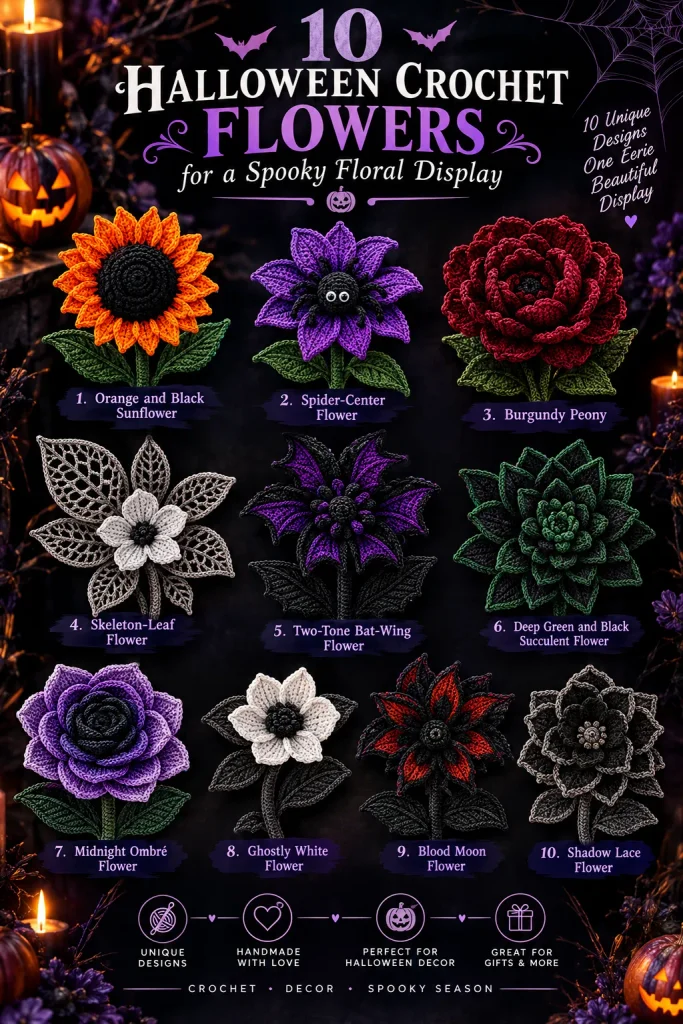
Quick Guide: Halloween Crochet Flower Styles
| Flower Style | Visual Mood | Best Use |
| Black rose | Dramatic, elegant | Bouquet focal point |
| Deep purple dahlia | Rich, layered | Centerpiece |
| Orange and black sunflower | Bold, graphic | Wreaths, wall decor |
| Wilted-look flower | Eerie, textured | Standalone accent |
| Spider-center flower | Playful spooky | Kids’ decor, party |
| Burgundy peony | Moody, romantic | Table arrangements |
| Skeleton-leaf flower | Delicate, ghostly | Minimalist display |
| Two-tone bat-wing flower | Whimsical, dark | Hair accessories, bags |
| Deep green and black succulent flower | Earthy, unusual | Modern decor |
| Midnight ombré flower | Dreamy, dramatic | Bouquets, gifts |
10 Halloween Crochet Flower Ideas
1. Black Rose
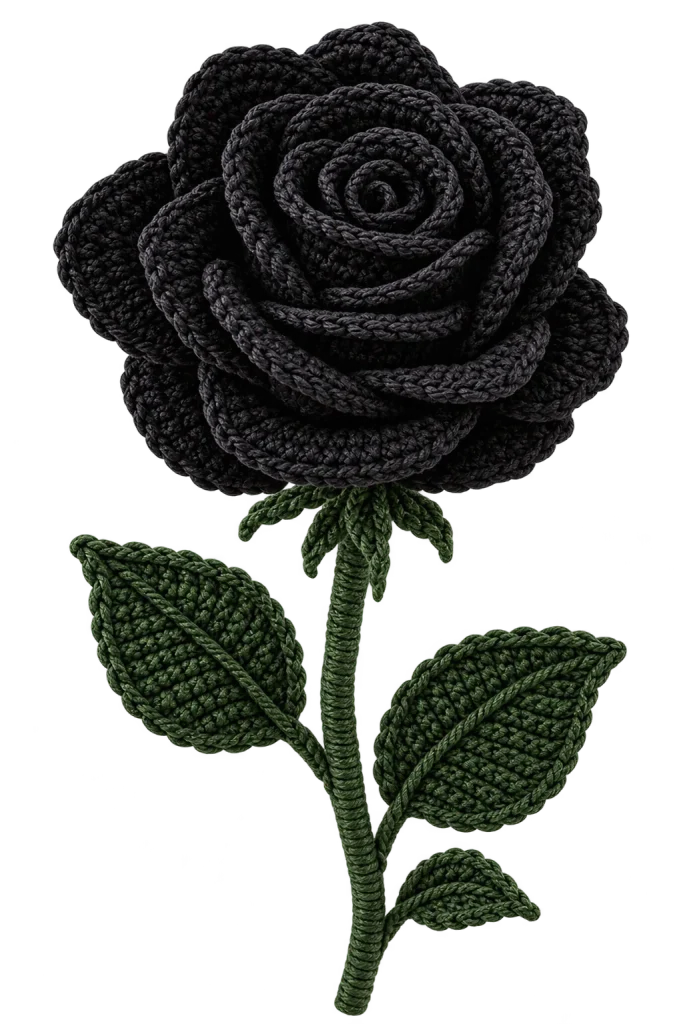
A rose worked entirely in black yarn loses none of its elegance and gains a completely different personality. The layered, spiraling petals that make roses so recognizable still read clearly in black, but instead of romance, the flower suggests drama. This is usually the piece that anchors a Halloween bouquet, since a single black rose surrounded by smaller flowers automatically becomes the focal point. It also works well on its own in a bud vase, where the dark color has room to stand out against a lighter background.
2. Deep Purple Dahlia
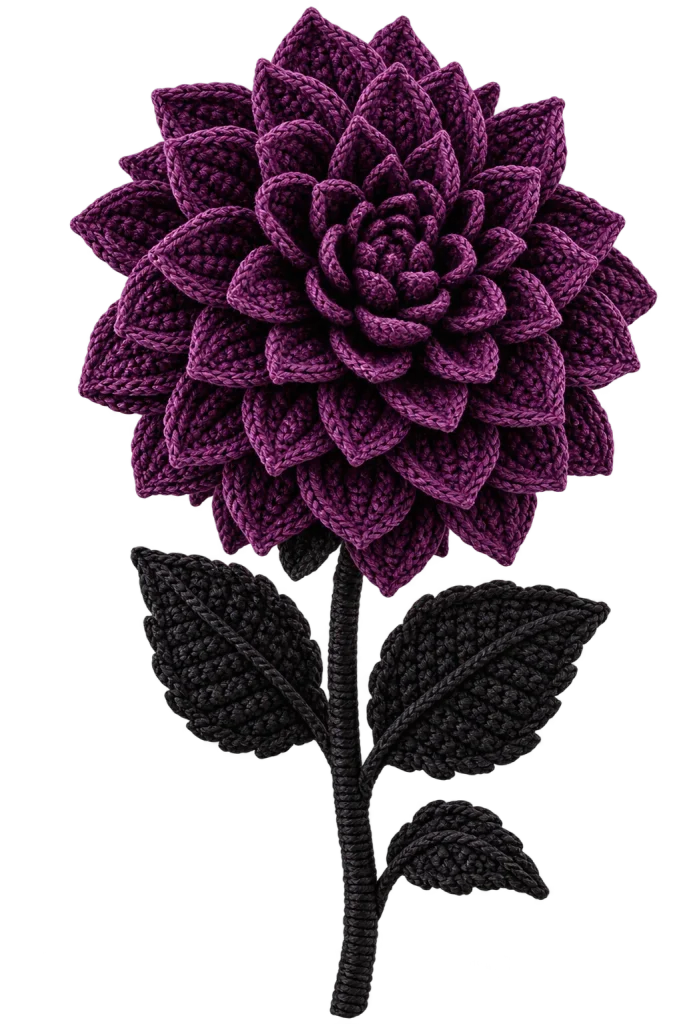
Dahlias are already known for their dense, layered petals, and that fullness translates beautifully into a deep purple or plum shade. Unlike black, which can flatten detail in photos, a rich purple keeps the layers visible and gives the flower real depth and texture. This makes it a strong centerpiece choice rather than an accent, since its size and complexity draw the eye on their own. Paired with black leaves or a dark stem, the purple reads as moody and rich instead of harsh.Deep Purple Dahlia
Dahlias are already known for their dense, layered petals, and that a Site Icon
The Site Icon is what
fullness translates beautifully into a deep purple or plum shade. Unlike black, which can flatten detail in photos, a rich purple keeps the layers visible and gives the flower real depth and texture. This makes it a strong centerpiece choice rather than an accent, since its size and complexity draw the eye on their own. Paired with black leaves or a dark stem, the purple reads as moody and rich instead of harsh.
3. Orange and Black Sunflower
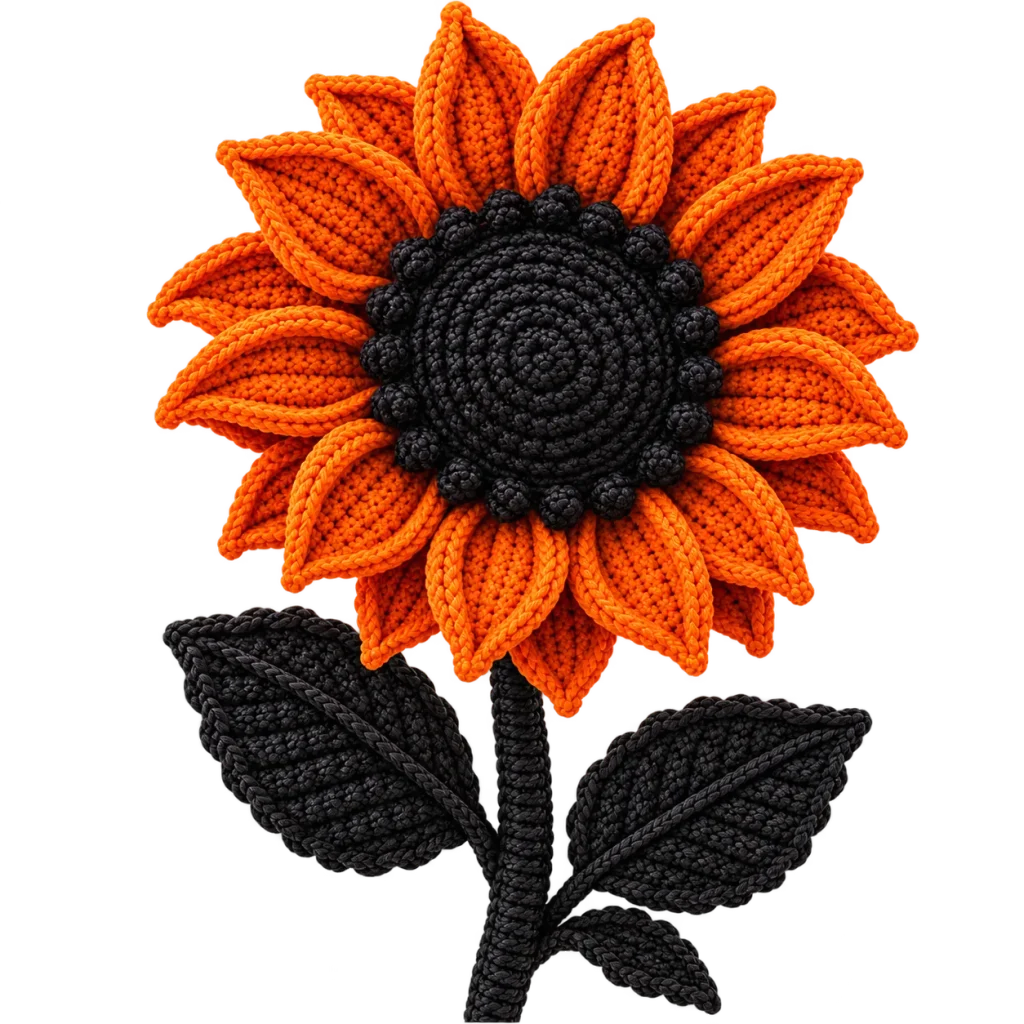
Sunflowers are naturally bold, and swapping the usual yellow petals for orange around a black center pushes that boldness straight into Halloween territory. The contrast is sharp and graphic, closer to a classic jack-o’-lantern palette than anything subtle. This flower tends to work best in wreaths or on a wall display where its size and color can be appreciated from across a room, rather than tucked into a small bouquet where it might overwhelm softer, darker blooms around it.
4. Wilted-Look Flower
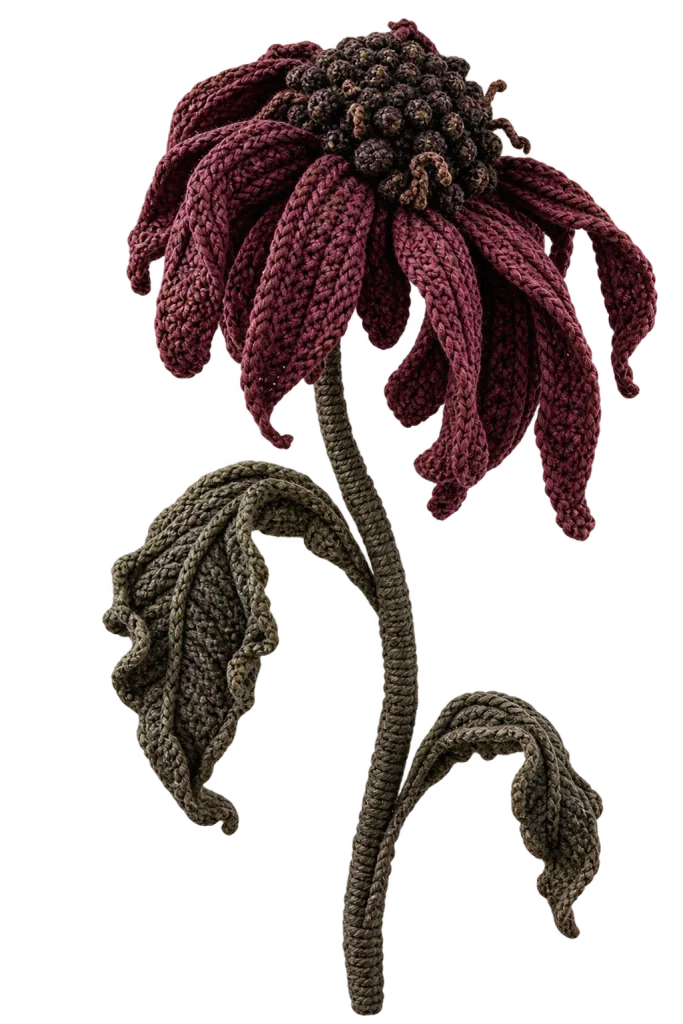
Instead of the usual crisp, upright petals, this idea plays with a deliberately drooping, uneven shape, petals that curl inward or hang slightly loose, as if the flower has started to wither. It’s an unusual technique choice, but it captures a genuinely eerie, almost gothic mood that a perfectly symmetrical flower can’t. Worked in a faded burgundy or dusty gray, it makes a striking standalone accent piece, especially propped in an old bottle or displayed next to candles where the shadows exaggerate the texture.
5. Spider-Center Flower
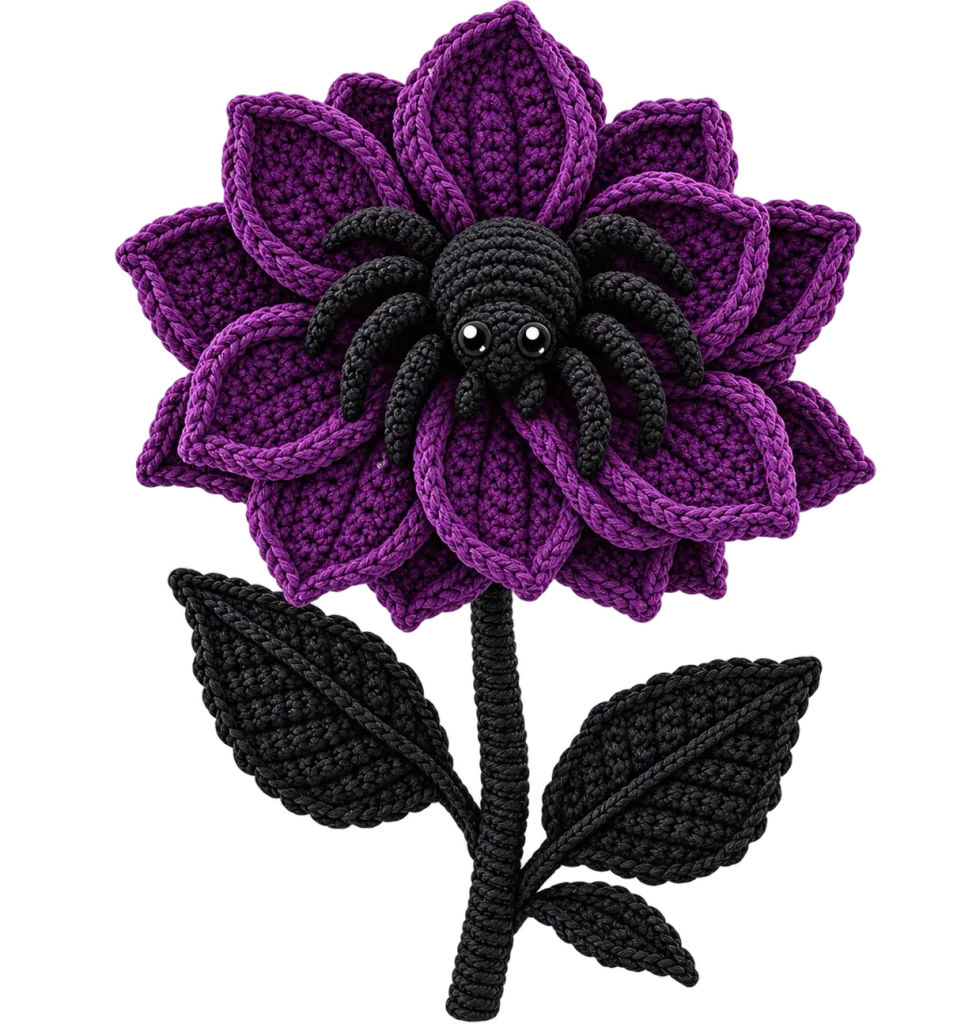
This one leans into the fun, slightly silly side of Halloween rather than anything genuinely creepy. A simple flower base gets a small crochet spider worked into or attached at the center, turning an otherwise ordinary bloom into a playful seasonal piece. It reads well from a distance, which makes it a natural fit for kids’ decor, classroom displays, or party centerpieces where the goal is charm rather than atmosphere. A handful of these mixed into an otherwise serious black-and-purple bouquet also adds a bit of levity without breaking the theme.Spider-Center Flower
6. Burgundy Peony
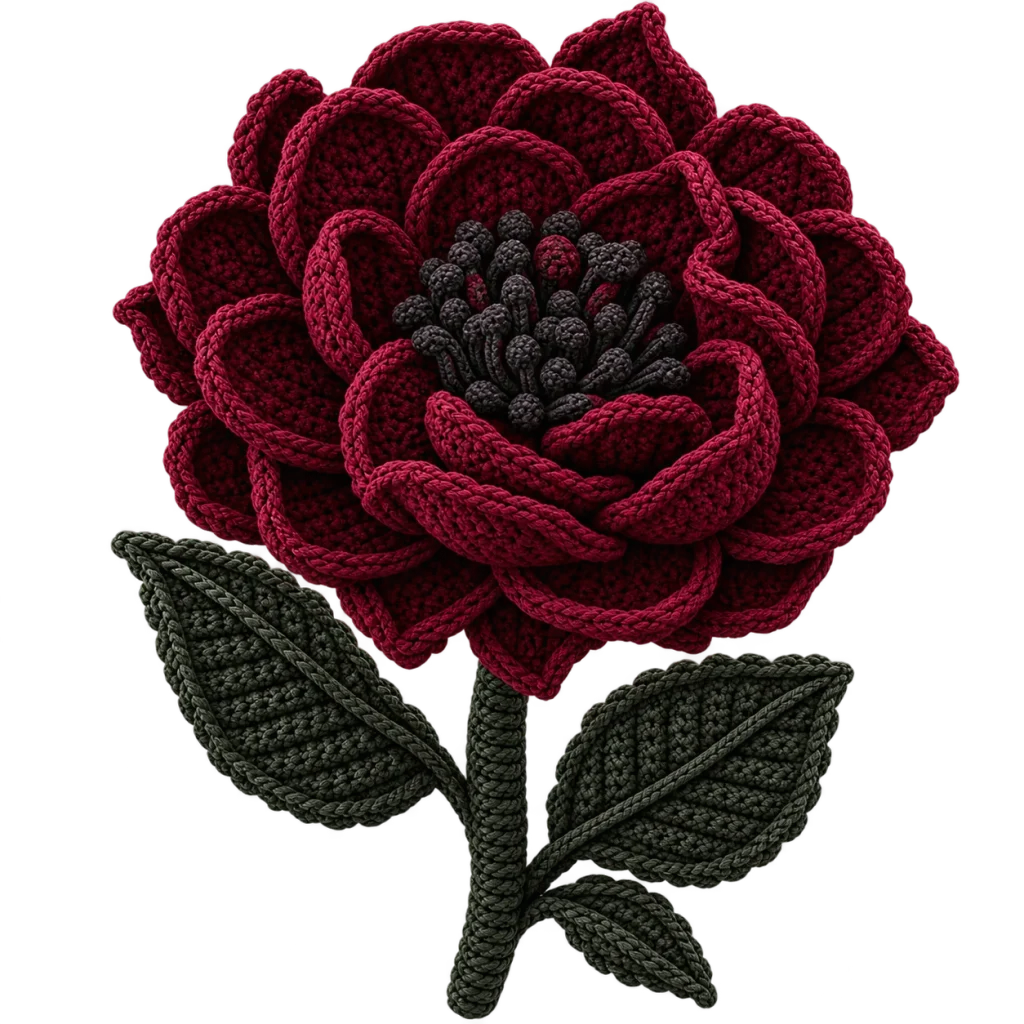
Peonies bring a soft, rounded fullness that most other flowers don’t have, and in a deep burgundy or oxblood shade, that softness turns moody instead of sweet. The color sits between black and red, so it reads as elegant and slightly dark rather than overtly spooky, which makes this flower a good choice for anyone who wants Halloween styling that still feels sophisticated. It pairs especially well in table arrangements alongside black candles or dark green foliage, where the deep red tone has enough contrast to stand out without competing with brighter pieces.
7. Skeleton-Leaf Flower
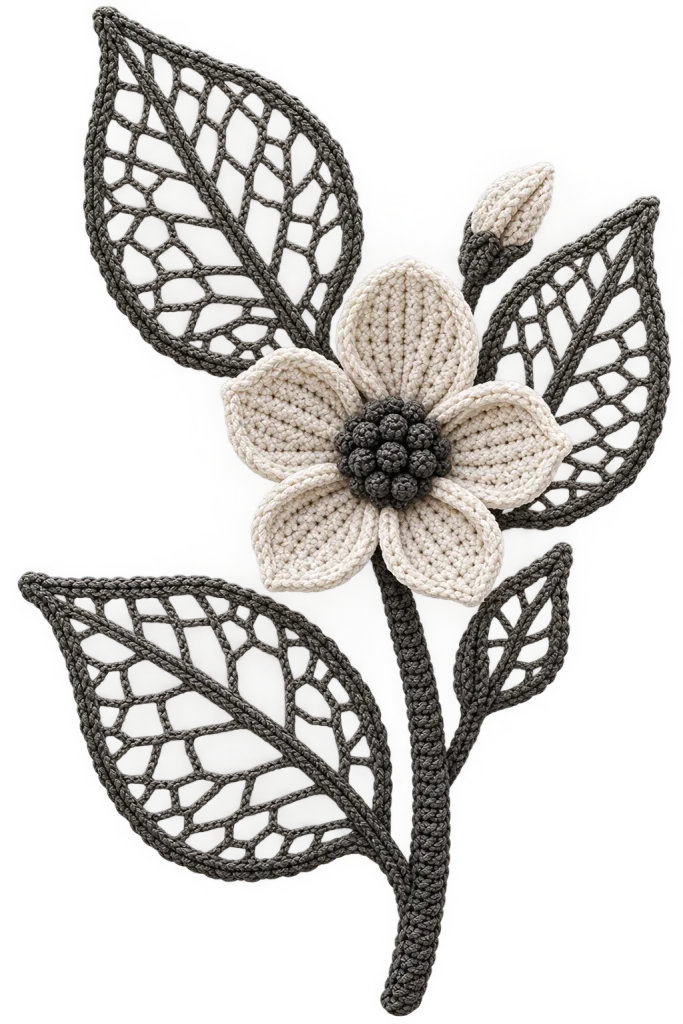
Rather than focusing on the petals, this idea puts the attention on delicate, open-lace leaves worked to resemble skeleton leaves, the kind with the fleshy part gone and only the vein structure left behind. Paired with a small, simple flower in white or pale gray, the effect is ghostly and a little haunting without relying on obvious Halloween imagery like bats or spiders. Because it reads as more minimalist than the bolder ideas on this list, it fits well into a pared-down, all-white or neutral spooky display rather than a heavily saturated one.
8. Two-Tone Bat-Wing Flower
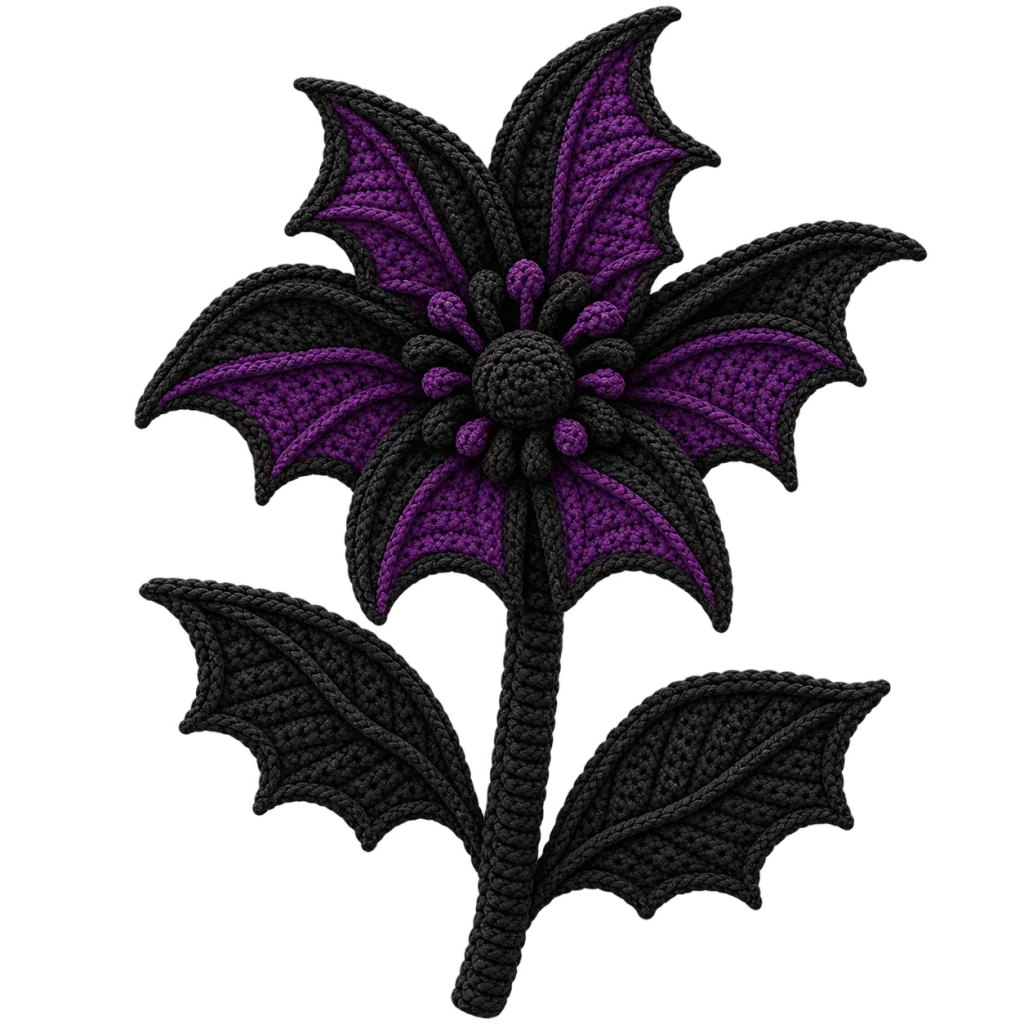
This idea shapes the petals themselves into pointed, wing-like forms, echoing a bat’s silhouette rather than a traditional rounded petal. Working the flower in two contrasting shades, black with deep purple, or black with a deep red, adds extra dimension to the wing shape. Because of its smaller scale, this style translates well beyond home decor into wearable pieces, clipped onto a headband, pinned to a bag, or attached to a costume, giving it more versatility than flowers meant purely for display.
9. Deep Green and Black Succulent Flower
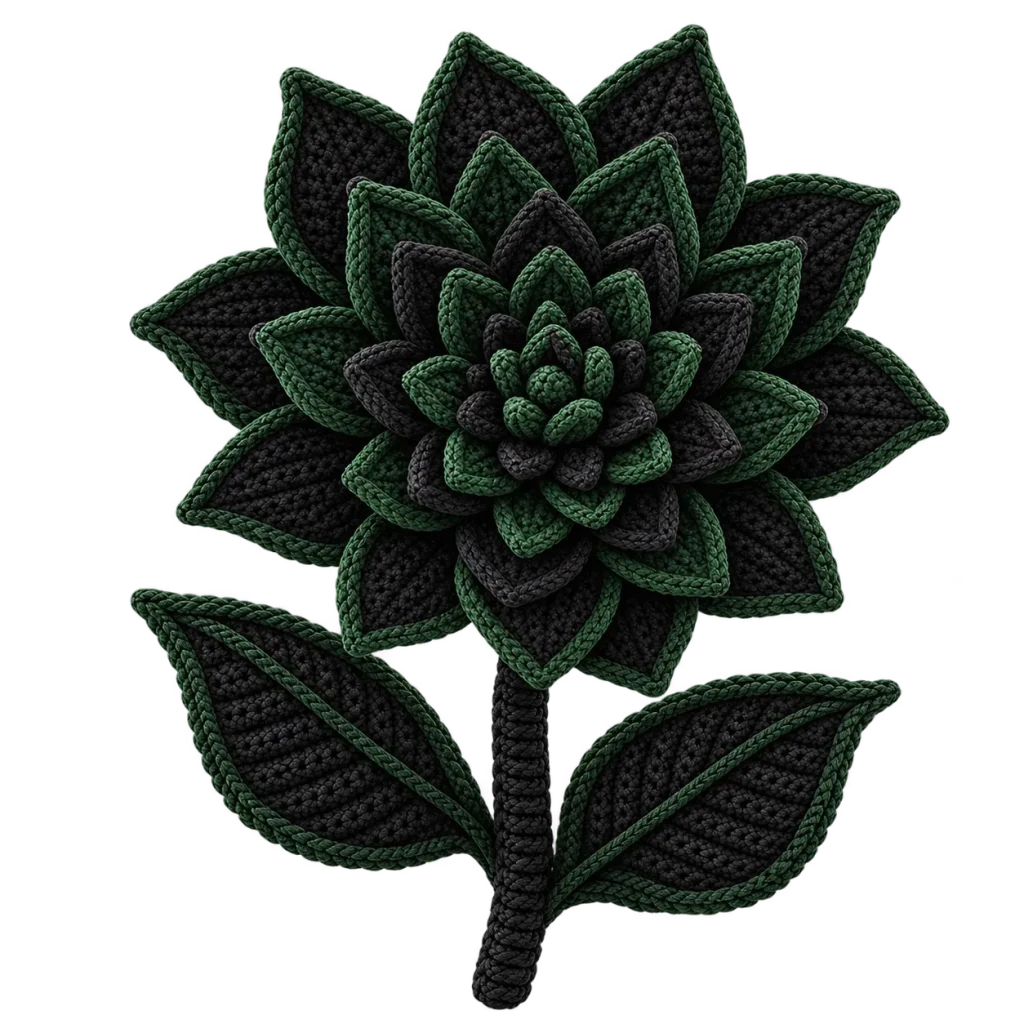
Not every Halloween flower needs to reference petals at all. This idea borrows the layered, geometric shape of a crochet succulent and reworks it in near-black and deep forest green instead of the usual soft greens. The result feels earthy and a little unusual, closer to something you’d find growing somewhere unsettling than a typical garden flower. It fits naturally into a modern, textural Halloween display, especially mixed with other dark botanicals rather than surrounded by brighter, more traditional blooms.Deep Green and Black Succulent Flower
Not every Halloween flower needs to reference petals at all. This idea borrows the layered, geometric shape of a crochet succulent and reworks it in near-black and deep forest green instead of the usual soft greens. The result feels earthy and a little unusual, closer to something you’d find growing somewhere unsettling than a typical garden flower. It fits naturally into a modern, textural Halloween display, especially mixed with other dark botanicals rather than surrounded by brighter, more traditional blooms.
10. Midnight Ombré Flower
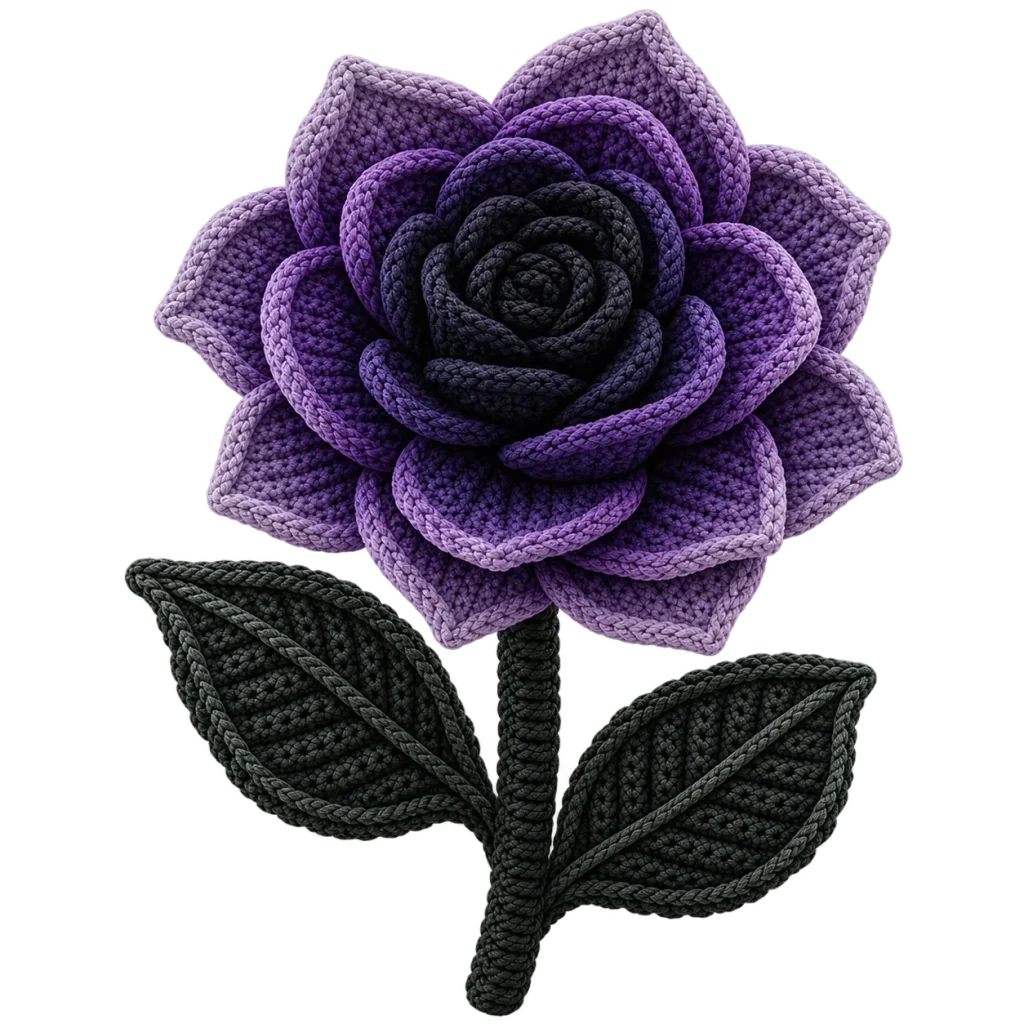
This idea takes a single flower shape, a rose, a peony, or a simple layered bloom, and works it in a gradient that shifts from deep black or navy at the center out to a lighter purple or gray at the petal tips. The fading effect adds movement and dimension that a single solid color can’t achieve, and it photographs particularly well thanks to the visible gradient. Because it reads as dramatic without being overtly Halloween-themed, it also makes a striking handmade gift for anyone who loves dark, moody florals year-round.Midnight Ombré Flower
This idea takes a single flower shape, a rose, a peony, or a simple layered bloom, and works it in a gradient that shifts from deep black or navy at the center out to a lighter purple or gray at the petal tips. The fading effect adds movement and dimension that a single solid color can’t achieve, and it photographs particularly well thanks to the visible gradient. Because it reads as dramatic without being overtly Halloween-themed, it also makes a striking handmade gift for anyone who loves dark, moody florals year-round.
Color Combinations Worth Trying
- Black and deep purple create a rich, layered look that feels elegant rather than costume-like, ideal for a black rose paired with a purple dahlia.
- Orange and black is the most recognizably Halloween pairing, best suited to bolder flowers like the sunflower where the contrast can really show.
- Burgundy and dark green soften the palette into something moody but still natural-looking, well suited to table settings and peonies.
- White and pale gray keep a display feeling ghostly and minimal rather than saturated, which works especially well with the skeleton-leaf flower.
- Black and deep red add a touch of classic gothic drama, particularly effective in smaller accent pieces like the bat-wing flower.
Building a Bouquet Around These Flowers
A Halloween bouquet generally holds together best with one dominant flower; the black rose or purple dahlia are strong choices, surrounded by two or three supporting pieces in complementary shades and a couple of smaller accents for texture. Mixing in something delicate, like the skeleton-leaf flower, keeps an all-dark palette from feeling too heavy, while a playful piece like the spider-center flower can soften the mood if the rest of the arrangement leans serious.
If you’re building toward a full seasonal display rather than a single bouquet, these flowers also pair naturally with other handmade pieces. For more ideas on filling out the rest of the room, it’s worth browsing 10 Halloween crochet decorations to make this fall or 10 Halloween crochet ideas for a spooky handmade home for pieces that work alongside a floral centerpiece.
FAQ
What’s the easiest way to make a flower feel “Halloween” without being too literal?
Color does most of the work. Switching a familiar flower shape, like a rose or peony, into black, deep purple, or burgundy already reads as seasonal without needing a spider or bat attached.
Can these flowers be displayed after Halloween ends?
Styles in burgundy, deep purple, or midnight ombré tend to work well into late fall, since the colors read as moody rather than strictly Halloween-specific.
How many flowers do I need for a full bouquet?
That depends on the size of the flowers and the look you want, but a mix of one larger focal flower with several smaller supporting blooms generally creates a fuller, more balanced arrangement than flowers of all the same size.
Are dark-colored crochet flowers harder to see the detail in?
Very dark colors like black can flatten fine texture in photos, which is why richer shades like deep purple or burgundy sometimes show layered petals more clearly.
Do these flowers work well as gifts?
Smaller, single-stem pieces like the bat-wing flower or a single black rose tend to make good gifts since they don’t require the recipient to be planning a full Halloween display.
What pairs well with these flowers besides other flowers?
Dark leaves, simple stems, and small accents like the spider-center detail can round out an arrangement without needing additional flower varieties.